With the Government recently bolstering investment into Electric Vehicles (EV) and Plug-in Hybrid Electric Vehicles (PHEVs) charging infrastructure in the UK, there is clearly an opportunity for contractors to embrace a new revenue stream. Here, Kevin Norman, senior product manager at Newey & Eyre explains why it’s time for contractors to take charge and get up to speed with EV.
Driven by a new wave of eco-legislation and pressure from the EU, 2015 saw an eruption of activity in the European low emission vehicle market – with the UK leading the way. Combined with the fluctuating cost of petrol and diesel, there is clearly an appetite for new technology that will ultimately cost drivers less. In fact, sales of alternatively-fuelled vehicles, including EVs and PHEVs, rose by over 40 per cent in the UK last year, gaining the largest ever market share for the sector to date.
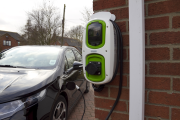
Whilst the industry has been advocating the potential of the market for many years, the reality is no one could have anticipated this unprecedented level of growth. A big factor has been the rapid growth of the UK’s EV charging infrastructure. Whereas in the past the UK lacked the infrastructure to allow motorists to reliably charge their cars, recent years have seen the Government and local councils splash out millions of pounds on building thousands of electric car charging points – minsters confirmed the number at 57,567 at the end of 2014.
Of course, the most conclusive argument for EV, however, is the cost saving to be had. On average, the Energy Saving Trust estimates that a full charge will cost around £2 to £3 and will give a typical range of 100 miles while driving 100 miles in a petrol or diesel car will cost around £12 to £18 in fuel; equating to six times the cost of the electric car. Better still, the cost savings are even greater when owners have access to an overnight low rate electricity tariff.
Furthermore, on the commercial front, EVs have the benefit of zero rate company car tax and exemption from road tax. They also avoid the London Congestion Charge and can benefit from free parking in many pay and display car parks. Topped with a reduction in insurance and maintenance costs, the argument for EV is surely conclusive and the recent acceleration of market growth shows no sign of abating anytime soon.
The good news for contractors new to the sector is that there are many training courses specifically aimed at those looking to diversifying into the EV sector. A good recommendation is the introductory EV charging course offered by NICEIC which is designed to teach contractors how to install EV charging points in compliance with BS 7671, the Electrical Safety Quality and Continuity Regulations and the new IET Code of Practice. It takes just one day and offers the ideal route for those looking to get involved in the industry.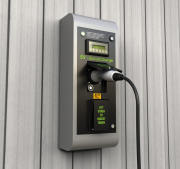
In addition, it is also important to work with a reputable supplier with a genuine expertise in the EV charging arena to ensure the utmost in product quality, reliability and, ultimately, a best practice installation.
There are a range of factors will influence a consumer’s decision on which EV charger is compatible with their lifestyle; these include vehicle type, desired speed of charge and future proofing. Plus, when it comes to the new build sector, more and more local authorities are stipulating that as part of planning permission approval EV charging points must be considered – and in some cases mandatorily implemented – as part of a development.
With this in mind, Newey & Eyre has developed a plethora of Newlec charging solutions to suit any vehicle and meet all legal requirements. The offer includes various types of charging units to reflect the mode of charging, whether it is a residential, commercial or public charge point, or if the charging point is to be wall mounted or ground mounted.
For the domestic user, a good choice is the Newlec Wall-Pod: EV Ready unit which offers a quality performance, sleek design and affordability. Providing the ultimate low-cost, future proof solution, this innovative charger not only charges in Mode 2 format but doubles up as an outdoor IP65 rated domestic 13amp maintenance socket, while being easily upgradeable to the full Mode 3 fast charging format. For the contractor, further benefits include exceptional ease of install and adherence to all legal requirements – plus, it’s available in brick-matching terracotta to ensure aesthetic appeal.
Equally, in the commercial domain where chargers are subject to vast use, robustness of design and optimised security is a must. Cue the Newlec EV SecuriCharge; a heavy duty, hard wearing, vandal resistant EV charging unit specifically designed and manufactured for public facing and exposed locations. Available in 1way and 2way, 32amp (7.2kW) single phase charging versions and featuring Type 2 IEC 62196 charging sockets: Mode 3 IEC61851-1 compliant communication protocol, SecuriCharge is ensured to meet the full breadth of charging requirements from the majority of car manufacturers. It is also easy to install and maintain, and compliant with all EVs and PHEVs, manufactured in compliance with to BS7671 Wiring Regulations and comes with a 1 year guarantee.
Visit neweysnews.co.uk to get the latest news and product information from Newey & Eyre. Alternatively, please call 0800 783 6909 or call into any local branch.