After the Zemo Partnership Summit Ollie Bradshaw, Sustainability Lead at Certas Energy, reflects on key drivers towards net zero in transport.
This month saw industry leaders and policy makers gather in Westminster at the Zemo Partnership Summit to discuss the transport industry’s move to net zero.
There was a necessary feeling of urgency in the room.
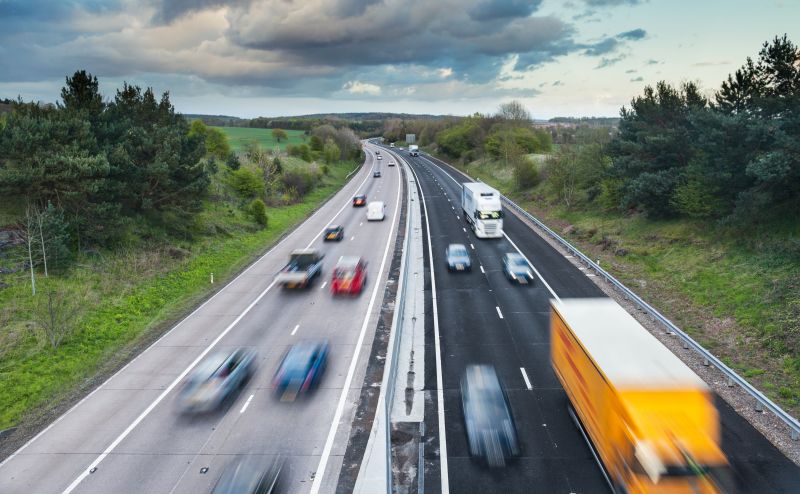
The transport and haulage industry is one of the largest contributors to carbon emissions, and the collaboration between sector leaders and policy makers is essential to drive change towards a sustainable future.
Several great sustainable solutions were explored, with electric vehicles at the forefront of much of the discussion, especially around long term solutions. Liquid renewables, such as hydrotreated vegetable oil (HVO), received a mention, but it was fleeting in comparison.
Whilst electrification is currently the clear decarbonisation long-term solution, we mustn’t overlook short to medium term solutions like HVO.
The transition to an entirely electric transport network cannot be immediate because replacing entire fleets is expensive and time consuming. As we work towards long term solutions, we can be making steps to cut emissions today.
HVO’s compatibility with existing vehicles and premium performance in engines makes it a crucial pillar in driving net zero.
It is clear that the future of the transport industry requires HVO and electric vehicles to be used in tandem.

What is HVO?
HVO is a drop-in alternative diesel produced from 100 per cent renewable waste and residue derived feedstocks, composed of hydrocarbon molecules with a chemical structure and specific energy density similar to fossil diesel.
The urgency with which the transport sector must consider the net zero targets is clear. Switching a fleet’s fuel to HVO can immediately reduce fuel-related net CO2 emissions by up to 90 per cent.
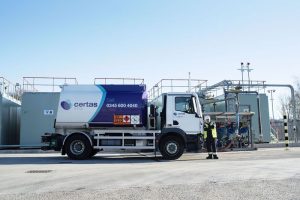
As the leading supplier of HVO in the UK, Certas Energy is championing the use of the biofuel to support the transition to net zero.
Why make the switch to HVO?
- The price of HVO has never been closer to diesel than it is now, making it a more accessible alternative for SMEs as well as larger companies.
- HVO also boasts benefits over other fuels – it has a longer shelf life than regular diesel due to the hydrotreatment process which removes oxygen and water among other impurities. Compared to biodiesel (also referred to as FAME), HVO reduces the risk of maintenance issues such as filter blockages and water contamination in bulk storage.
- Unlike compressed natural gas (CNG), which requires new temperature-controlled tanks, HVO can be used in existing diesel containers without vehicle modifications. This allows for quicker integration into fleets.
- Its environmental impact is minimal. Being a second generation advanced biofuel, HVO is entirely composed of waste and residue derived feedstocks meaning, there is little to no risk of deforestation being a consequence of fuel production.
Who is making the switch?
Interchangeable with standard diesel, HVO is a sound alternative for most sectors, such as agriculture, construction, marine and rail, as well as transport.
SMEs are beginning to follow suit as large companies are integrating HVO into their fleets to meet sustainability goals, especially as the price of the biofuel is aligning with that of standard diesel.
Amongst the organisations trialling liquid renewables is the Royal National Lifeboat Institution (RNLI).
The non-profit recently used HVO to power the Coast to Cobbles event which saw a lifeboat embark on a 200 nautical mile journey powered by HVO. The impact was impressive, and that one journey alone saved six tonnes of carbon emissions.
HVO is becoming so popular that at Certas Energy, year-on-year sales are projected to increase by 400% between 2023 and 2024, marking an impressive shift in the move towards sustainable alternatives to diesel.
I am confident that in the coming years, biofuel will be recognised as an integral part of the just transition to net zero.