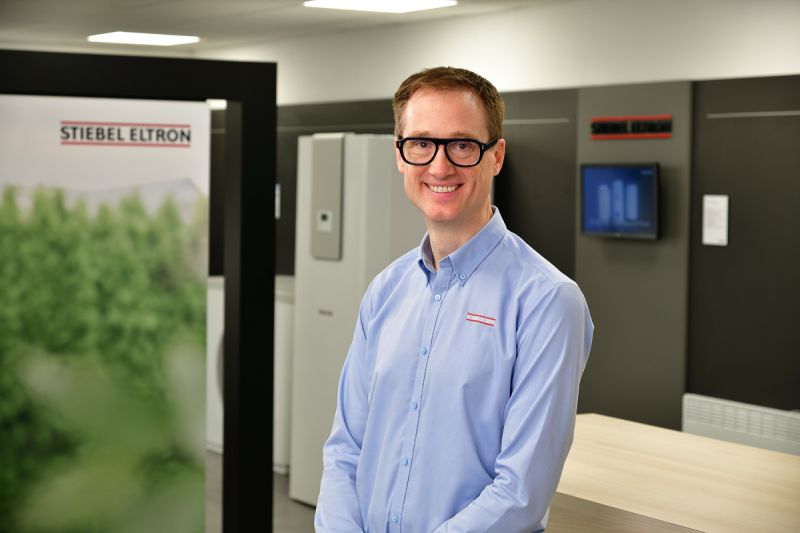
In 2019, the Conservative government announced ambitious plans to ensure all new homes built from 2025 onwards would be ‘zero carbon ready’, writes By John Felgate, Managing Director, STIEBEL ELTRON UK.
Promising homes with 75 to 80% fewer CO2 emissions than those built to 2013 standards, the Future Homes Standard (FHS) is designed to position the UK as a world leader in sustainable buildings.
Now, six years on, the industry is eagerly anticipating the final legislation. While the publication originally expected in Autumn 2025 has not yet been released, the sector remains energised and ready to embrace this milestone.
A game-changing standard
At its core, the FHS is game-changing. It represents a huge leap forward for both homeowners and the construction industry.
It has the potential to dramatically improve the energy and carbon performance of new homes across the UK, ensuring they are designed from day one with the net zero transition in mind.
For homeowners, this means lower bills, improved comfort and more energy-efficient properties delivering ‘world leading levels of energy efficiency’.[i]
Placing an onus on low carbon forms of heating, the two most common forms of heating, fossil fuel boilers and direct acting electric heating, will be unlikely to meet the new standard. Homes will be built with more efficient building fabric to minimise heat loss too, including enhanced insulation, windows, and airtightness.
The standard will also encourage the consideration of renewable technologies, with solar PV proposed as a functional requirement for most new homes.
While all this makes for promising reading, the ongoing delays to its introduction are keeping the industry anticipating the green light.
Why Clarity Matters
As the industry awaits the FHS’s full introduction, many developers, manufacturers, and technology providers are eager to know the new measures they will need to adhere to. This will enable the industry to confidently proceed with design specifications, build timelines, and invest in the right low‑carbon technologies from the outset.
Without clarity, it can impact planning and budgeting as they look to avoid costly redesigns and project delays once the standard is introduced.
Manufacturers across the supply chain, from insulation and heat pump suppliers to renewable tech specialists, are ready to scale their operations. With definitive timelines, the sector will be able to invest further in new product lines, machinery and training.
The long awaited FHS also has a vital role to play in accelerating the UK’s adoption of renewables. The National Audit Office (NAO) has identified policy inconsistency and skills gaps as barriers to meeting the UK’s target of 600K heat pump installations per year by 2028.
Heat pump installations would need to accelerate 11-fold to reach the target, with the NAO highlighting how current uptake is slowing progress on decarbonising properties.[ii] The FHS can be a catalyst for change, aligning industry demand with long‑term environmental goals.
Among the range of heating technologies available, heat pumps stand out as the most practical, proven, and scalable route to reducing carbon emissions from home heating, especially in new build homes designed with sustainability in mind.
Compared to traditional gas boilers, they emit almost 95% fewer carbon emissions annually. STIEBEL ELTRON’s own research also discovered a WPL-A 07 Premium air-source heat pump produced 250kg CO2e annually, whereas a conventional gas boiler in the same dwelling emitted more than 3,500kg CO2e.[iii]
For developers, designing homes to incorporate heat pumps is both cost‑effective and future‑proof. The FHS will further encourage developers to choose low‑carbon heating, helping reduce the legacy of homes dependent on fossil‑fuel systems.
Delivering a new era of net-zero homes
If the Government is serious about ushering in an era where new homes are optimised with the environment in mind, it must unveil its Future Homes Standard sooner rather than later.
To unlock the full potential of the Future Homes Standard, the Government must publish the final details and set a clear implementation roadmap. The industry is ready and eager to put the standard into action.
With its introduction, the Government will incentivise a mass shift towards renewable technologies and environmentally friendly measures across the housing industry. This will empower innovative developers to deliver the most sustainable homes possible, and inspire the development of sustainable infrastructure across the UK as we decarbonise power grids to mirror the new environmental standards.
Additionally, it will generate significant career opportunities in the green-building sector, driving development of skills and training. This will ensure our workforce is world leading in delivering low-carbon homes.
If the UK is to cement its position as a global leader in sustainability and usher in a new generation of greener homes, the timely rollout of the Future Homes Standard will be essential.
Warm Homes Plan
Following the Government’s unveiling of Warm Homes Plan, John Felgate said: “We welcome the Government’s Warm Homes Plan which is a game changing moment in accelerating low-carbon homes across the country. The £15 billion investment, combined with funding packages and heat pump grants sends a strong signal that renewable heating technologies are central to delivering low-carbon homes across the country.
“We’re pleased to see the inclusion of heat pumps, batteries, insulation and smart controls, as well as an onus on ventilation and requiring solar panels on new builds from 2026, which will create the joined-up approach the renewable heating sector has been calling for.
“It also highlights the need for good indoor air quality which is just as important as warmth and efficiency, and we’re pleased to support this with our ventilation systems ensuring homes stay comfortable, healthy, and free from pollutants.
“Additionally, the Warm Homes Agency and increased powers for regional mayors will help ensure that delivery will be smarter, more local, and more effective.
“This strategy ties in well with our approach with our heating, hot water, and ventilation products designed to integrate seamlessly with renewable technologies and time-of-use tariffs, supporting a whole-house approach to energy efficiency. And we remain fully committed to supporting those in the industry to ensure every project delivers high-quality installations.
“Today’s announcement will give households, installers and manufacturers the confidence to accelerate the transition to cleaner, low-carbon homes. Now the Government has unveiled its plans, it is time for them to push on and share further detail on how it will achieve its ambitions with a view that the Warm Homes Plan is progressed without delay.”
[ii] Low heat pump uptake slowing progress on decarbonising home heating – NAO press release
Learn more: https://www.stiebel-eltron.co.uk/en/home.html
For more news: https://essmag.co.uk/category/news/