Over the past several years, many organisations have developed detailed energy strategies, writes Graeme Hamilton, Managing Director – Energy, OCS. These plans often reflect careful analysis, clear ambitions and a long list of actions that promise to reduce consumption and emissions.

Graeme Hamilton, Managing Director – Energy, OCS
Yet when you speak to the people responsible for delivering those plans, the same story surfaces. The strategies exist, the audits are complete and the recommendations are familiar, but organisations are progressing at very different speeds. Many are successfully delivering meaningful work, while others face barriers such as limited capital, complex estates or competing operational pressures that make it harder to move as quickly as they would like.
This gap between strategy and delivery is the point where organisations stumble most often. Many have invested considerable time and budget in understanding their buildings but then struggle to convert those insights into practical change.
Part of the problem is that nearly half of firms are now allocating more than 25% of their sustainability budgets to mandatory ESG reporting, rather than to actual carbon reduction project implementation. This isn’t a sign that organisations lack commitment, rather, it reflects the growing regulatory burden that can limit the resources available for on-the-ground delivery.

Where organisations get stuck after the audit
Energy audits usually identify similar opportunities. Lighting upgrades, improvements to heating and cooling, better controls and a more precise understanding of how buildings behave day to day. These insights are valuable, and many organisations act on them effectively. However, others can find their progress slowed not by lack of intention, but by practical challenges: estates teams being stretched, capital constraints, end-of-life estates, or simply the scale of co-ordination required to translate recommendations into action.
The result is a wide spectrum of maturity. Some organisations are already moving at a strong pace, while others are just beginning the journey and need a structured, manageable way to build momentum.
This is why a staged approach to energy work, such as OCS’ five step model, has become increasingly valuable. Moving through discovery, design, delivery, maintenance and ongoing optimisation gives organisations a clear route to follow. It also allows them to enter at a point that reflects their own level of readiness.
The model ensures that the work does not stop at installation, as buildings often change and solutions must evolve alongside them. Businesses can adopt similar approaches in order to build momentum more quickly, keep projects moving as their estates evolve and avoid the pattern of audits being completed with no follow up.

Why energy must be tied closely to FM
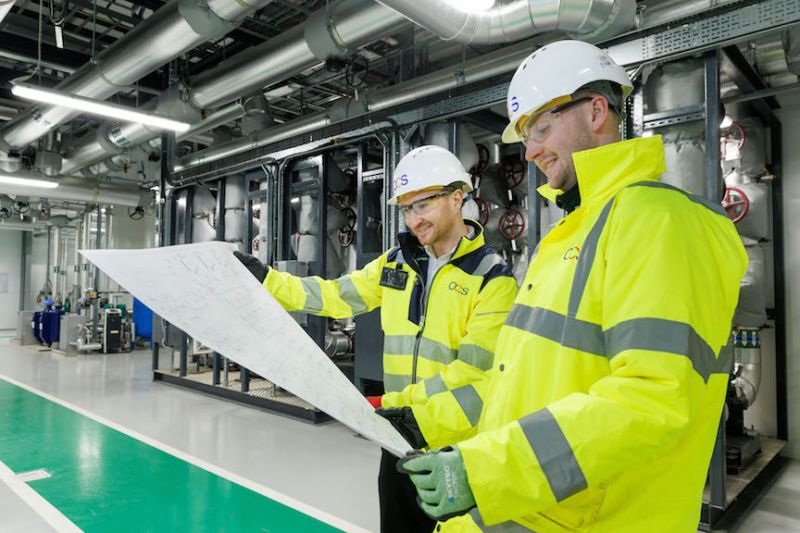
Organisations often treat energy projects as something separate from the core operation of their estates. This division slows progress more than any technical barrier. Real energy reduction depends on integrating it with the teams already responsible for running buildings. FM engineers, in particular, understand the nuances and behaviours of a building better than anyone else. They know when a system is drifting, when controls are not working as expected and when usage does not align with design.
Buildings are responsible for over 40% of total energy consumption in the UK. If the country is to make meaningful progress, the role of FM becomes central. This sector carries a sizeable portion of the responsibility for how buildings operate each day. When FM and energy work sit together, clients can maintain the improvements they have invested in, rather than experiencing a short burst of savings that quickly fades.
This is where contract structures matter. Many FM contracts still focus on metrics such as the number of calls answered. These do not reflect the outcomes that matter to clients now. There is a growing need for performance measures that include energy usage, giving FM providers a clear mandate to reduce consumption rather than simply maintain equipment. If organisations want real change, they must rethink the way they measure results.
A shift in the market
With funding pressures in the public sector and broader caution influenced by global political shifts, many organisations are reconsidering their timelines for more complex projects. As a result, the focus is moving towards smaller, day to day improvements. These can be delivered more quickly and do not rely on large capital programmes. In many ways, they are the real engine of progress. Lighting upgrades, operational adjustments and data led improvements often yield meaningful savings without the disruption of major works.
This practical, incremental approach often emerges as the most resilient. It keeps programmes moving even when external conditions shift. It also helps keep buildings aligned with how they are actually used. Even something as simple as a layout change in an office can disrupt the original energy design. Ongoing optimisation is therefore essential, otherwise buildings drift from their intended performance over time.
Skills, technology and the future of delivery
New technologies are important and will shape the long term energy system, but they are only effective when paired with human expertise. Smart buildings do not work automatically. They need skilled engineers who know how to interpret data and adjust systems. Without the right people, even advanced technology cannot deliver its potential.
This skills challenge is present on a national scale. The UK needs large numbers of trained professionals to install and maintain new energy solutions, from heat pumps to solar infrastructure. FM teams are well placed to contribute to this shift, but they need investment in training and development to meet the scale of demand.
Energy strategies alone will not move the industry forward, but neither will criticism. Progress improves most when organisations are supported with the right tools, capacity and guidance, wherever they are starting from. Real progress depends on partnership: aligning FM and energy, building capability gradually, reshaping contracts where helpful, and supporting organisations as they balance ambition with practical constraints.
Every organisation is on its own journey, and many are already delivering impressive results. Our role as the incumbent FM is to help them accelerate that progress, remove barriers where they exist, and ensure improvements are sustained over time.
Learn more: https://ocs.com/uk/
For more news: https://essmag.co.uk/category/news/