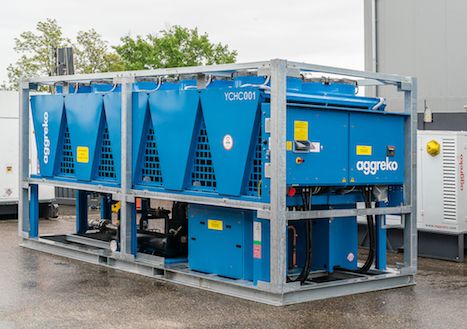
For World Refrigeration Day, Aggreko, is calling upon energy managers to level up their cooling strategies through hybridisation. This year’s theme of ‘Cool Intelligence’ is inviting conversations on how the industry can design, install, operate, and maintain sustainable heating and cooling systems intelligently.
Chillers are essential for process industries, especially in energy manufacturing where maintaining accurate temperatures is critical to ensuring products remain consumable and safe for customers. However, many industries relying on this equipment are now subject to increasing pressures, such as stricter compliance and efficiency standards.

Chris Smith
With the additional issues of ageing grid infrastructure and increased weather volatility due to climate change, Chris Smith, Head of Temperature Control at Aggreko, is urging the manufacturing industry to level up its cooling infrastructure this World Refrigeration Day.
He said: “From the conversations we are having with stakeholders within the industry, we know that demand for more efficient or advanced cooling technology is only rising. Especially within industries like energy, where protecting both the volume and quality of a product have become more challenging than ever due to climate change. Weather volatility means that obtaining consistent outcomes is harder, risking delays to critical operations.
“So, the focus is on how manufacturers can supplement on-site cooling capacity when demand increases, while making sure this integration works seamlessly with their existing systems. And at the same time, ensure costs and energy consumption remain manageable and aligned with their sustainability objectives.”
The theme of Cool Intelligence is pushing the industry to think about solutions that stand the test of time, with a focus on efficiency and adaptability. Aggreko’s latest research report, Temperature Check: Is UK Manufacturing Keeping its Cool?, supports this necessary shift, after a staggering 99% of UK manufacturers surveyed revealed they faced downtime in the past 12 months due to cooling equipment failures, with 43% facing more than 3 weeks of downtime.
As manufacturers face growing cooling demands and ageing infrastructure, many are increasingly relying on temporary cooling solutions to maintain operational continuity. However, these systems are often powered by traditional generators, which can drive up fuel costs and carbon emissions.
Chris believes the industry should be looking at new technology and accelerating the adoption of hybrid cooling packages that incorporate battery energy storage systems (BESS). With temporary chillers and cold storage units becoming an increasingly common requirement, integrating BESS can significantly improve efficiency, reduce operating costs and lower environmental impact. In addition, battery-powered solutions offer near-silent operation compared with conventional generators, helping businesses meet both sustainability targets and operational requirements.
A case study on Cave de Lugny, – a large wine co-operative in France – demonstrated how optimal cooling was maintained in its cellar throughout the harvest season thanks to BESS powered chiller package. A hybrid chiller package from Aggreko helped the co-operative save 2,660 litres of fuel and reduce on-site CO2 emissions by 40%..
Chris concluded: “This World Refrigeration Day, manufacturers should reflect on what solutions can truly level up their cooling operations. It’s a challenging time for all sectors, but hybridisation is a necessary consideration as we move into the future.
“Adaptability and longevity are no longer preferences but stepping stones towards a more intelligent era of cooling. And done correctly, BESS can provide critical temporary power to temporary cooling and refrigeration, mitigating the risk of power outages and downtime, while keeping energy costs low and efficiency high.”