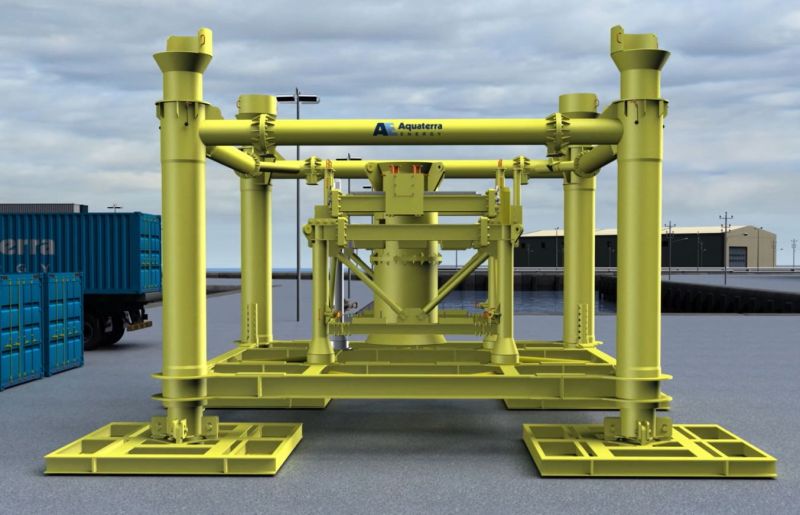
Aquaterra Energy has marked a key milestone for its inaugural Recoverable Abandonment Frame (RAF) system by moving into fabrication. The system is destined for the Northern Endurance Partnership (NEP), one of the UK’s most advanced carbon capture and storage (CCS) projects.
Developed as part of Aquaterra Energy’s wider legacy well re-entry and re-abandonment service, the patent pending RAF system will tackle one of offshore CCS’ most complex integrity challenges by ensuring historic wells do not become weak points in future CO₂ storage sites. RAF enables a vertical well re-entry tieback method that supports safe and efficient re-entry, remediation and permanent abandonment, while providing long-term assurance that intersecting legacy wells can be securely managed.
Aquaterra Energy estimates the technology could reduce abandonment costs by up to £20 million per well and cut remediation timelines by as much as 50%.

George Morrison, CEO of Aquaterra Energy, said: “Seeing the first RAF system move into fabrication here in the UK is a major milestone for Aquaterra Energy and a strong example of what British offshore engineering can bring to the global CCS sector. Carbon storage will be critical to industrial decarbonisation, but projects cannot scale without confidence in the safe management of legacy wells. NEP is the first deployment of RAF, but it addresses a challenge we are already discussing globally. We see this becoming an important enabling technology for offshore CCS projects in mature basins worldwide, making that move from concept into fabrication is hugely exciting.”
Fabrication is being carried out by Derrick Services Ltd (DSL) in Great Yarmouth, with additional components and specialist equipment sourced across the UK supply chain.
NEP provides the offshore carbon storage infrastructure underpinning the East Coast Cluster, one of the UK’s largest industrial decarbonisation initiatives. With a permitted injection rate of up to 4 million tonnes of CO₂ annually from 2028, the project will play a key role in supporting the UK’s wider decarbonisation objectives and is among the leading offshore CCS developments currently progressing globally. The RAF system is planned to be deployed on the NEP expansion stores.
For more information: Aquaterra Energy
For more news: https://essmag.co.uk/category/news/