Scotland’s ambitious energy transition faces a critical challenge that threatens to undermine our national goals. While we push ahead with plans for battery storage and renewable energy projects, the skills shortage across our energy sector is not merely a recruitment issue – it represents a fundamental misalignment between our workforce capabilities and the rapidly evolving demands of sustainable infrastructure development.
As industry leaders, we must acknowledge that traditional approaches to talent acquisition and development are no longer sufficient. The scale and urgency of our climate commitments require us to rethink how we build the workforce that will deliver Scotland’s energy future.
Experience across the industry has shown that long-term investment in early careers represents one of the most effective strategies. Early engagement programmes that introduce engineering concepts to primary and secondary school students can reshape perceptions of the industry. At Story Energy Scotland, we’ve implemented our STORY STEM Programme which creates pathways from classroom activities to site visits where students witness engineering in action. Industry observations suggest that participants in such programmes are substantially more likely to pursue engineering qualifications when they have a better understanding of what careers they can pursue in this field.
Structured work experience opportunities further strengthen this pipeline. Our summer schools, operated since 2020 for 15-17 year-olds, welcome applicants from all backgrounds and interest areas, recognising that the energy sector needs diverse talents beyond traditional engineering roles. These programmes serve as an effective introduction to the variety of career paths available in our industry – from project management and sustainability to digital technologies and community engagement.
The industry must broaden its definition of potential talent. Evidence increasingly demonstrates that diversity drives innovation, yet many energy and infrastructure companies maintain unnecessarily restrictive recruitment criteria. School leavers, college graduates, university students, and career changers all bring valuable perspectives. Organisations that have successfully implemented flexible entry points report accessing previously untapped talent pools, particularly among women and other underrepresented groups.
Civil engineering remains at the heart of Scotland’s energy transition, yet it’s one of our most misunderstood and underappreciated professions. The reality of modern civil engineering is worlds away from outdated perceptions of muddy construction sites. Today’s civil engineers are using cutting-edge technology like drone surveys, 3D modelling, and sustainable materials to shape tomorrow’s infrastructure. They’re solving complex environmental challenges, designing and innovating solution whilst creating the resilient infrastructure Scotland needs. This perception gap directly impacts recruitment, with qualified candidates choosing sectors they perceive as more innovative or consequential. We urgently need to reshape the narrative around civil engineering careers – highlighting the innovation, purpose-driven work, and genuine impact these roles offer.
The apprenticeship model holds particular promise for addressing immediate and long-term skills needs. Organisations investing above the industry average in apprenticeships demonstrate consistently better retention rates and greater workforce adaptability. We’ve developed multi-level apprenticeships that accommodate different entry points, from school leavers to adult career changers. The most effective apprenticeship structures embrace comprehensive rotation systems that expose participants to multiple aspects of the business, not just technical roles. This approach produces more versatile professionals capable of understanding projects holistically.
Across the sector, forward-thinking organisations are implementing enhanced support systems for workers at all career stages. Competitive maternal and parental leave policies, flexible working arrangements, and substantial investment in ongoing training correlate directly with improved retention. According to the Society for Human Resource Management (2023), the cost of replacing experienced staff can exceed 150% of annual salary in technical fields, making these investments deliver clear financial returns alongside workforce stability.
Our workforce brings diverse expectations and preferences to the workplace, which we’ve learned to address thoughtfully. Some team members value stability and recognition for their expertise, so we provide mentoring opportunities that allow them to share knowledge while receiving respect for their contributions. Others prioritise work-life balance and autonomy, which we support through flexible scheduling and remote work options where possible. Many colleagues are motivated by purpose-driven work and development opportunities, so we create clear connections between daily tasks and broader sustainability goals, plus structured learning pathways. For those who value technological integration, diversity, and social responsibility, we respond with cutting-edge digital tools, inclusive practices, and transparent environmental commitments. Rather than making assumptions based on age or experience, we focus on understanding individual motivations and creating a workplace that accommodates various working styles and priorities.
Our approach does more than just fill immediate job openings. We see our skills initiatives as investments in communities, creating lasting employment opportunities in areas that need economic support. Our education programs help develop local talent while strengthening the communities where we work. We measure our success through real results: successful career transitions, a more diverse workforce, better project delivery, and positive community impact.
Our new Perth operations and ambitions for Inverness exemplify this approach, offering tremendous opportunities to develop talent in innovative ways. Building on Story Scotland’s decade of success since its founding in 2014, our energy division currently employs 30 dedicated staff members and plans to grow by more than 100 new positions over the next five years. This expansion encompasses various disciplines and experience levels, creating pathways for graduates, apprentices, trainees, and career changers. With our commitment to a 10+ year investment horizon in Scotland’s energy sector, we’re creating sustainable career opportunities that align with Scotland’s net-zero ambitions.
Scotland’s energy skills challenge demands a coordinated response across industry, education, and government. Individual company initiatives, however successful, cannot address the scale of the challenge alone. Industry-wide collaboration on skills development, shared apprenticeship schemes, and coordinated educational outreach represent the next frontier in building a workforce capable of delivering Scotland’s sustainable energy future.
The organisations that will thrive in this challenging landscape will be those that view workforce development not as a cost centre but as a strategic investment in future capability. By adopting a long-term perspective, embracing diverse talent, and committing to continuous development, the sector can transform the current skills crisis into an opportunity to build a more resilient, innovative, and effective workforce.
At Story Energy Scotland, our vision is to create a business that our people are proud to work for, where we leave a lasting legacy in the communities we serve. We’re not simply filling positions – we’re helping build Scotland’s sustainable future. Our experience shows that with creativity and a willingness to try new approaches, we can turn the skills challenge into an opportunity for everyone while supporting Scotland’s journey to Net-Zero.
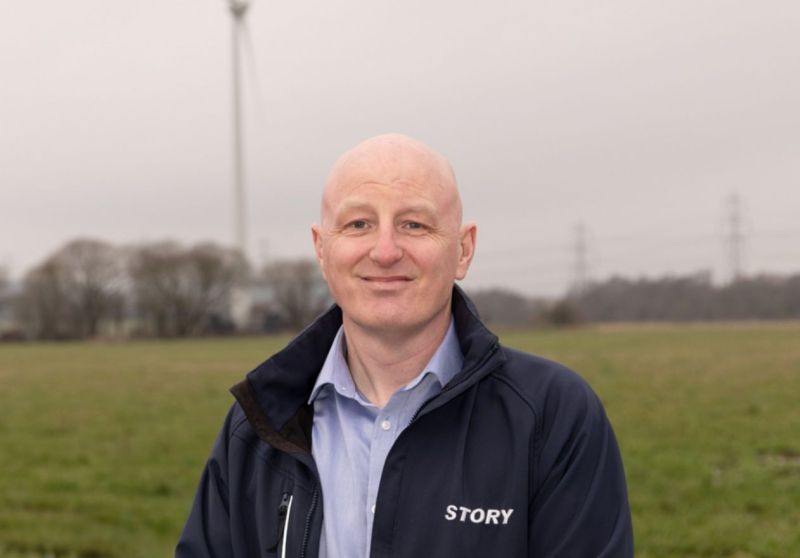
Alan Boyle, MD Story Energy Scotland