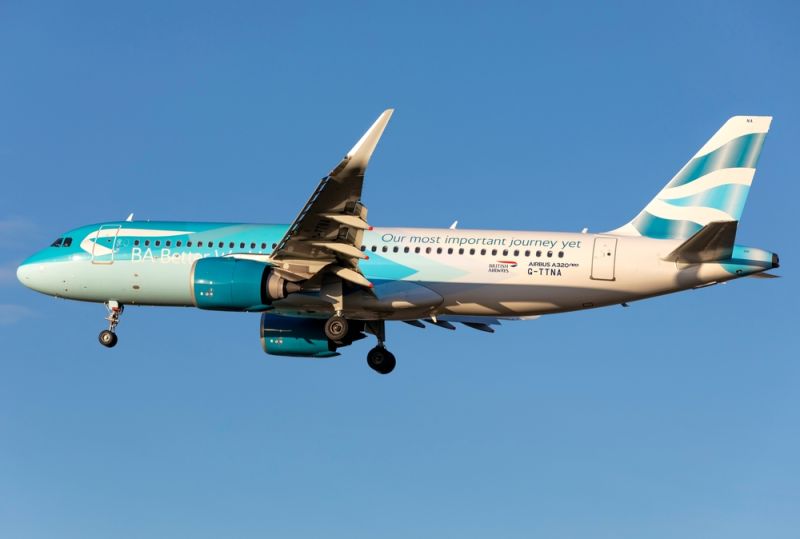
EcoCeres has signed a multi-year agreement to supply British Airways with sustainable aviation fuel (SAF). This strategic partnership is expected to help the UK’s flagship carrier reduce lifecycle carbon emissions of approximately 400,000 metric tonnes, compared with use of the same volume of conventional jet fuel.
This reduction is equivalent to the total emissions of flying ~240,000 economy class passengers on return flights between London and New York.
Carrie Harris, Director of Sustainability at British Airways, added, “At British Airways, we see sustainable aviation fuel (SAF) as an important part of our BA Better World strategy. In 2024 alone, SAF accounted for 2.7% of British Airways’ total fuel use and is contributing to our achievement of a 13% reduction in our carbon intensity since 2019. That’s why this new agreement with EcoCeres is so exciting – it’s another important step forward on our journey to reach net-zero carbon emissions by 2050.”
Matti Lievonen, CEO of EcoCeres, stated, “We are proud to partner with British Airways in this strategic agreement to jointly tackle greenhouse gas emissions in aviation. Our commitment to sustainability is unwavering, and this partnership exemplifies our dedication to providing innovative fuel solutions that will help the aviation industry meet its environmental targets. Together, we are contributing to the broader effort of reducing emissions in transportation.”
About Sustainable Aviation Fuel
‘Sustainable Aviation Fuels ‘(‘SAF’) are defined in the Refuel EU Aviation Regulation as aviation fuels that are either synthetic aviation fuels, aviation biofuels or recycled carbon aviation fuels.
SAF produces similar levels of carbon dioxide to conventional aviation fuels when burned, but the carbon dioxide generated is already part of the carbon cycle and is not extracted from the ground specifically for creating aviation fuel. This means that using SAF results in a reduction in carbon emissions compared to the traditional jet fuel it replaces over the lifecycle of the fuel. A major challenge is that SAF availability remains low globally and today accounts for 2.7% of our total fuel.
As SAF is similar in chemistry to traditional fossil jet fuel, it can be dropped straight into existing fuel supply infrastructure and aircraft without modification. As a result, it is the readiest solution to reduce the carbon emissions associated with aviation. Emission reductions from the use of SAF are measured as the reduction of carbon emissions on a greenhouse gas lifecycle basis, typically by 80% or more compared with the fossil jet fuels it replaces.
For more information about EcoCeres, please visit https://www.ecoceres.com/