In the weeks since the Iran war began, the world has experienced what the IEA’s Fatih Birol has called “the biggest energy security threat in history.”

Author: Chris Kimmett, CEO, ODQA
Brent crude surged over 55% from its pre-war level, peaking near $120 a barrel. The Strait of Hormuz, through which roughly 20% of global oil trade normally flows, has been functionally closed. The EU alone has spent an additional €24 billion on fossil fuel imports since the conflict started.
The policy and media response has followed a familiar pattern: emergency oil stock releases, fuel tax cuts, subsidies for electric vehicles, and renewed calls for grid-scale renewables.
But there is a vast, largely invisible energy exposure that is barely discussed: industrial heat.
The Biggest Energy Bill You’ve Never Heard Of
Heat accounts for roughly half of all energy consumed globally. For heavy industry, most industrial heat is still generated by burning fossil fuels and is a major business expense.
In cement production, energy is 30-40% of total production costs; kiln fuel alone is 70-80% of a plant’s energy budget. In alumina refining, it’s the single largest operating cost. In ceramics manufacturing, it’s the core production asset.
When oil and gas prices surge, they do not simply affect transport. They compress operating margins across energy-intensive industries that produce the materials modern economies depend on.
Price Spikes Are Not Anomalies. They Are the System.
The instinct after every crisis is to treat it as exceptional.
However, over the past six years the world has experienced repeated energy shocks: the collapse and rebound of oil prices during COVID-19, Russia’s invasion of Ukraine and Europe’s gas crisis, disruption to Venezuelan crude supplies, and now the Iran conflict and closure of the Strait of Hormuz. Different causes, different regions, but the same result: sudden increases in industrial energy costs.
That is four major energy market dislocations in six years.
The Alternative: Zero Marginal Cost Heat
There is another way to think about industrial heat.
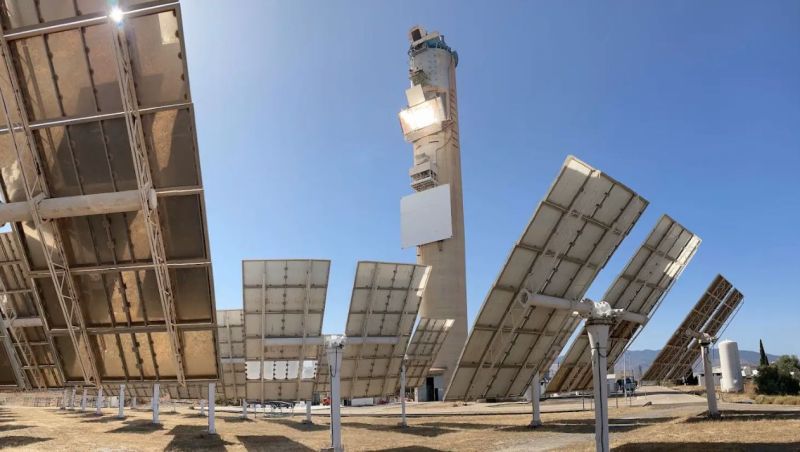
Concentrated solar thermal technology can deliver industrial process heat at temperatures from 400°C to above 800°C, using nothing but sunlight. There is no fuel price exposure. Once installed, the system produces heat, becoming a fixed operating cost for the life of the asset, decoupled from oil prices, gas prices, carbon prices, and geopolitics.
Consider a plant in any sector running industrial heat on natural gas. There is no operational lever the plant manager can pull to offset energy price exposure.
Now consider the same operation supplied by concentrated solar heat. The capital cost is known, the operating cost is fixed, the exposure to commodity markets is eliminated.
Over the lifetime of the asset, the greatest savings often come not in normal years, but by avoiding the cost shocks that destroy margins during periods of geopolitical instability.
Why This Matters Now
The EU’s AccelerateEU plan, published in April this year, now explicitly identifies solar thermal alongside electrification and geothermal as part of its response to energy insecurity, signalling that industrial heat is moving into the mainstream of energy policy.
But the opportunity is far larger than EU policy alone. The world’s most energy-intensive industrial operations are disproportionately located in the world’s best solar resource regions. Chile’s copper mines sit under some of the highest direct normal irradiance (DNI) on earth. North Africa’s phosphate and cement plants operate in conditions ideal for concentrated solar. Australia’s alumina refineries are in regions with abundant solar resource. Southern Europe’s ceramics and cement industries face both high gas prices and excellent solar conditions.
The geographic alignment between industrial heat demand and solar resource is not a coincidence to be noted. It is a strategic advantage to be exploited.
A Different Kind of Hedge
Every energy crisis produces a wave of demand for hedging instruments, supply diversification, and government intervention. These responses are necessary but insufficient. They manage the symptom without addressing the cause.
The underlying problem is simple: heavy industry runs on a fuel whose price is determined by forces entirely outside the control of the people who use it. A cement plant manager in Andalusia or a copper mine operator in the Atacama does not have operational control over conflicts and geopolitics.
Concentrated solar thermal does not eliminate all risk, but it does permanently remove fuel cost volatility from the operating model of an industrial facility.
In a world where the IEA describes the current situation as the greatest energy security challenge in history, and where the World Bank forecasts a 24% surge in energy prices, the question for industrial leadership is straightforward: How many more crises will it take before we stop hedging the problem and start solving it?
Learn more: https://odqa.com/
For more news: https://essmag.co.uk/category/news/