Public consultations relating to the Jackdaw and Rosebank fields in the North Sea recently closed, and it looks likely that Secretary of State for Energy Security and Net Zero Miatta Fahnbulleh will approve the Jackdaw gas field over the coming weeks, writes Will Llewellyn, UK CEO, Waga Energy.

Will Llewellyn, UK CEO, Waga Energy.
Debate surrounding the controversial projects has been largely framed as a trade-off between the UK’s climate commitments vs. energy security. In my opinion, however, landfill biomethane offers a route through this debate where we can achieve both outcomes whilst also boosting our domestic economy.
As the nation’s demand for gas remains high yet we continue to see an uptick in interest in renewable, grid-compatible alternatives, I urge the government to realise the full potential of landfill biomethane. Landfill biomethane is a mature, immediately deployable, homegrown source of renewable energy, and should be seen as a recognised contributor delivering on the same goals that Burnham’s government is prioritising – energy independence and security, a practical and scalable decarbonisation solution, and sustained economic growth.
The Anaerobic Digestion and Bioresources Association, a key member under the industry campaign group Green Gas Task Force, recently collected signatures to lobby the government with the “Back British Biogas Letter” delivered on 1st September to Andy Burnham and John Healey. The letter called for a larger Green Gas Support Scheme budget, biomethane to be recognised as a Net Zero fuel under the UK Emissions Trading Scheme, and multi-year funding. As a group, they see biomethane as a significant yet under-utilised asset for the UK, a resource which has untapped potential, and a huge enabler of domestic economic retention. Notably, this group focuses specifically on anaerobic digestion (AD) instead of landfill biomethane, but I encourage the accelerated deployment of landfill biomethane infrastructure across the UK when taking meaningful action in creating new policies.
Methane is significantly more potent than CO2 as a greenhouse gas, meaning any landfill gas not captured does enormous harm to the environment. Converting the gas into biomethane instead of just generating electricity from it avoids this potential damage whilst turning it into a practical, dispatchable energy source.
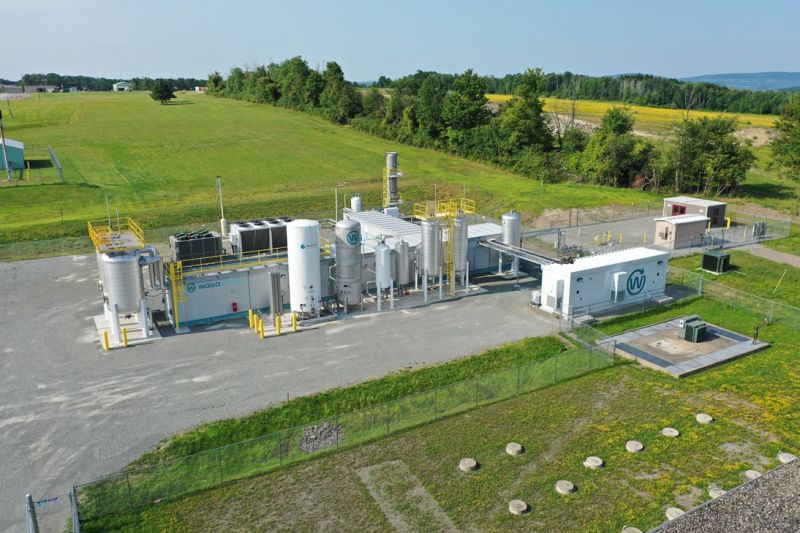
In order of how much value each method actually recovers: flaring destroys the methane but retains zero energy potential, converting the gas to electricity captures some value but is subject to conversion losses, and converting to biomethane is the most efficient due to higher capture rates. For context, the UK has around 540 landfill sites which together represent more than 8 TWh of energy to valorise. Not every landfill site is suitable for the production of biomethane, but, per Waga Energy findings, 100 of the largest landfills alone could deliver up to 5.5 TWh of biomethane in the short term– that’s enough to fuel up to 10,000 gas HGVs.
This estimate is only accurate though if the biomethane is genuinely new, raising the concept of ‘additionality’. Particularly relevant to landfill gas – much of which is already generating electricity, its real additionality lies in displacing fossil gas at the point of use, not in avoiding emissions already being controlled. The distinction is timely given the pending decisions on Jackdaw and Rosebank, so why don’t we start to treat landfill biomethane as a genuine national resource and unlock the UK’s forgotten gas field?
A wider economic UK argument also exists for growing gas responsibly and incorporating landfill biomethane into the nation’s energy plans. Through proven upgrading technologies, landfill gas can be converted into grid-quality biomethane capable of supporting households, businesses and industry. Scaling up production would create and support a meaningful number of ongoing engineering, waste management, construction and operations jobs, in particular in rural areas and across local supply chains. Although organic waste will be progressively banned from landfills (from 2028), existing sites will continue to generate substantial landfill gas volumes for the next 20–30 years — a long runway for new biomethane projects. Avoiding an over-reliance on imported fossil resources is critical and better utilising landfill biomethane is one way to do this.
Westminster’s ongoing debate isn’t about whether Britain needs gas. It’s about where the gas comes from, and at what cost to supply resilience, the climate and the economy. The UK is already considering what a post-Green Gas Support Scheme (GGSS) framework and biomethane regime will look like, so let’s stop passively reacting to global energy volatility. Let’s start creating a level playing field with landfill gas electricity plants where landfill biomethane infrastructure can start to be deployed.
Learn more https://waga-energy.com/en-uk/
Click here for more news News Archives – Energy Sustainability Solutions