According to a recent survey, almost three-quarters (71%) of UK business leaders believe that the government’s climate policy conflicts with economic growth, and half (50%) consider the 2050 net zero target unrealistic.¹
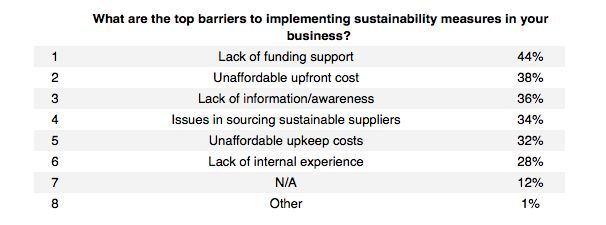
To help understand the challenges business owners face, money.co.uk business loans experts have surveyed over 500 UK SME owners to reveal the top barriers to implementing sustainability measures and offer their tips on overcoming them.
Barriers to sustainability in business and how to overcome them:
Almost half of SMEs (44%) say one of the biggest roadblocks is not having the financial backing to get started. Many green projects require a cash injection before they start saving money.
While national funding can be limited, local initiatives are bridging the gap. One example is a scheme in Stoke‑on‑Trent and Staffordshire. As of February 2025, the local Green Solutions/Green Loan scheme offers businesses grant and borrowing options, as well as a free training course on running a sustainable business.
There are other financial options if grants or subsidies aren’t available in your local area. You could look at a business loan or business credit card if the repayments are comfortably covered by the savings you’ll make over time.
- High upfront costs stop nearly two in five SMEs from implementing sustainable business strategies
For 38% of SMEs, the price tag on eco-friendly upgrades is one of the main reasons for holding back. Even when the numbers will work in your favour in the long run, it’s not always easy to part with a lump sum now.
Breaking projects into smaller, manageable phases can make them less daunting. Start with lower-cost changes like insulation or LED lighting before moving on to bigger investments such as electric vehicles or on-site renewable energy.
- A lack of available information holds back sustainability in business
More than a third (36%) of SMEs said they don’t have enough information to take the next step in making their company greener. The good news is, there’s support out there. Government-backed tools like the UK Business Climate Hub are free to access and packed with practical advice to help you build a clear plan.
Joe Phelan, money.co.uk business loans“expert said: “One of the biggest hurdles for SMEs wanting to go green is covering the upfront costs. Responsible lending provides a solution, allowing businesses to invest in sustainable changes now and repay gradually, without jeopardising financial stability.
“Spreading costs through a business loan makes upgrades more manageable, while the savings from energy-efficient systems can quickly outweigh the repayments. For example, installing energy-efficiency measures can cut energy bills by thousands each year for SMEs.”
Extra support for green business investment:
Alongside responsible lending options, there are also government-backed schemes designed to make sustainability upgrades more affordable:
- Boiler Upgrade Scheme (BUS) – Offers grants of up to £7,500 to help small businesses and property owners switch to low-carbon heating systems, such as heat pumps.
- Green Business Loan Scheme – Gives Welsh businesses tailored support to cut carbon emissions while lowering their future energy costs by offering loans with discounted interest rates and flexible repayment dates.
- Local and regional schemes – Many councils offer funding to help small businesses go green. The options differ depending on where you’re based, so check your local authority’s website or use the Find a Grant tool to see what support is on offer.
You can view the report in full here: https://www.money.co.uk/business/business-statistics/business-sustainability-report
Are you interested in featuring the information from this report? Please don’t hesitate to contact me if you have any questions or if there’s anything further I can help you with.
1-British Standards Institution (BSI)
For more news, click here.