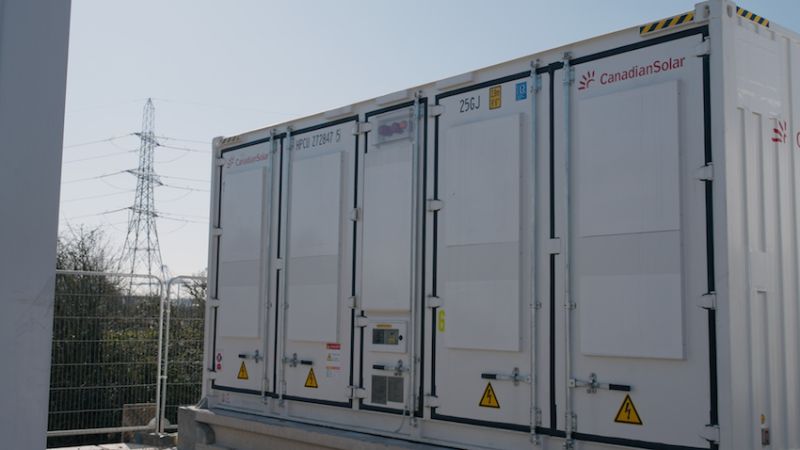
In the journey to decarbonise the UK’s electricity grid, Long Duration Energy Storage (LDES) has emerged as a critical tool. Dan Moore, Head of BESS Asset Management, Root-Power, comments.
LDES refers to energy storage systems capable of delivering continuous power for extended periods. Until recently, the industry debated what ‘long duration’ really means, with many considering four hours sufficient. In March this year, when Ofgem published its Technical Decision Document, that all changed. A clear benchmark was set; LDES must sustain full rated power for a minimum of eight hours over a 25-year period. This definition isn’t just semantic, it reshapes the landscape for developers, investors, and technology providers. It signals a shift from short-term flexibility to long-term resilience, aligning with the UK’s Clean Power 2030 ambitions and strengthening the importance of Battery Energy Storage Systems (BESS) in our pathway to net zero.
Encouraging investment in LDES
Launched earlier this year, Ofgem’s LDES Cap and Floor scheme is designed to stimulate investment in LDES by offering a stable revenue framework. The scheme is split into two tracks: Track One for projects connecting before 2030, and Track Two for those between 2030 and 2033. It also distinguishes between two technology streams based on maturity: Stream 1 (TRL 9) and Stream 2 (TRL 8), with minimum entry requirements of 100MW/800MWh and 50MW/400MWh respectively.
The financial mechanism is simple yet powerful. If market revenues fall below a predetermined ‘floor,’ Ofgem tops up the difference. If revenues exceed the ‘cap,’ the surplus is returned. This structure provides a predictable income stream over 25 years, making projects reliable and protecting them from a volatile market.

What does this mean for BESS?
Battery Energy Storage Systems, particularly those using lithium-ion technology, face unique challenges in meeting the 25-year, 8-hour discharge requirement. To uphold Ofgem’s criteria, developers must either oversize the system at build or plan for augmentation throughout its lifecycle.
Oversizing is often the preferred method because it doesn’t require any additional planning modifications, land right negotiations – such as the extension of red line boundaries – or engineering considerations such as DC/DC converters. It also ensures compliance with the scheme’s stringent requirements without compromising operational efficiency.
At Root-Power, we’ve embraced this challenge. Earlier this year, we submitted 300MW of projects into Ofgem’s LDES tender. Split across four locations, the projects will utilise Vanadium Flow Battery Systems to deliver a combined 2400MWh storage capacity.
Unlocking the full potential of LDES
The cap and floor scheme isn’t just a financial tool, but a strategic means in which to unlock the full potential of long duration storage. It encourages innovation, investment and ensures that the UK grid can rely on stable power even when the sun isn’t shining and the wind isn’t blowing.
As we look ahead, the success of LDES will depend on collaboration between regulators, developers, and technology providers. Ofgem’s scheme lays the foundation, and the energy storage industry needs to embrace the changes and challenges that come its way.
For more information, please visit: https://www.root-power.com/
For more news, please visit: https://essmag.co.uk/category/news/