Chris Payne, Co-founder & Director of PureTec Separations Ltd discusses how efficient water use (and reuse) will play an important role in the future of energy generation
As demand for water continues to rise in the UK, and global energy prices remain volatile, the relationship between water and energy is drawing increasing scrutiny.
For the energy sector—particularly power generation and heavy industry—water is not just a cooling medium or process input, it’s a critical operational resource that demands careful management.
Choosing to invest in water efficiency technology, such as a comprehensive reuse system can not only ease pressure on local water supplies but also generate substantial energy and cost savings.
The energy cost of water
Water use in the energy sector is far from passive. Extracting, treating, and distributing water comes with a significant energy footprint, whether for steam production, product formulation, or cooling.
For example, mains water requires between 0.5 and 1.5 kWh per cubic metre to produce and deliver, even in regions with optimised infrastructure. Groundwater extraction can consume 0.4 to 0.9 kWh/m³, while surface water sources such as rivers or lakes use approximately 0.2 to 0.4 kWh/m³ due to lower pumping requirements.
When reused water is substituted for freshwater sources, these energy inputs can be dramatically reduced. Water reuse systems, particularly those implemented on-site, reduce reliance on distant or energy-intensive water supplies.
What’s more, intercepting greywater or treated wastewater can reduce the need for both extraction and energy-intensive treatment of raw water, achieving a twofold benefit in energy and cost efficiency.
Reuse in wastewater treatment: double the benefit
Conventional wastewater treatment processes are among the most energy-consuming in the water management chain. By reducing the volume of water discharged for off-site treatment through reuse, energy consumption can be significantly cut. On-site or decentralised water reuse systems can relieve the burden on municipal treatment infrastructure while offering the additional advantage of lowering a plant’s overall energy use.
Certain advanced reuse technologies can even become net energy contributors. For instance, anaerobic digestion processes in wastewater systems can generate biogas, which can be harnessed to offset energy use on-site.
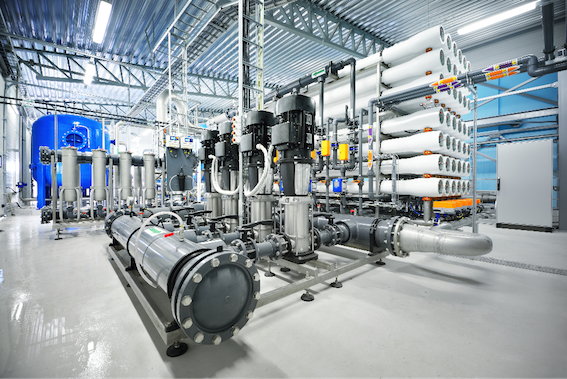
Meanwhile, membrane filtration systems such as reverse osmosis (RO) typically consume between 0.5 and 1.5 kWh/m³ — on par with or below the energy cost of sourcing and treating fresh water from mains or boreholes.
These solutions are increasingly common in industrial settings, where high water throughput and stringent purity requirements make efficient reuse systems particularly cost-effective. Plants that invest in state-of-the-art filtration and recycling systems are not only reducing their environmental footprint but potentially protecting themselves against future resource price shocks.
Power generation: closing the water-energy loop
In thermoelectric power plants, where water is extensively used for cooling and steam generation, the potential for water reuse is especially high. Instead of relying on large-scale water withdrawals from freshwater sources, many facilities are turning to municipal reclaimed water for cooling purposes. This shift not only lowers freshwater dependency but also reduces the energy expended in transporting and treating raw water. Beyond this, it represents a shift in attitudes towards full circle sustainable solutions.
Water reuse also plays a vital role in reducing the energy required for high-purity steam water treatment. On-site recycling of process water using RO and other membrane-based technologies can streamline the treatment process, cutting down both chemical usage and energy input.
Inland power plants, in particular, stand to benefit from water reuse strategies. These facilities often face limited access to surface water and must invest heavily in pumping water from remote sources. Reusing internal water streams drastically reduces these pumping demands, conserving both energy and capital.
Moreover, the environmental compliance burden associated with wastewater discharge is growing. Energy-intensive post-treatment is often required to meet strict regulations. So by minimising discharge through reuse, power plants can reduce these energy costs while also mitigating environmental impact.
Synergies with renewable energy
As the energy sector transitions to low-carbon sources, water reuse is finding new roles in solar thermal and geothermal installations. These technologies are highly water-dependent yet frequently located in arid regions. Efficient water management in these contexts ensures operational stability and can enhance overall energy yield.
For example, in concentrated solar power (CSP) plants, water is essential for both steam generation and mirror washing. Reusing process water reduces the need for continuous freshwater input, particularly in desert environments where water logistics can be both costly and complex.
The path ahead
The imperative to reduce energy consumption and secure water access is pushing the energy sector to reconsider traditional linear models of water use. Reuse is no longer a niche consideration — it is a mainstream strategy delivering tangible benefits.
As technologies advance and regulatory pressure mounts, early adopters of efficient water reuse systems will find themselves not only ahead on sustainability metrics but also well-positioned to reduce operational expenditure.
For energy leaders looking to future-proof their operations, water reuse offers a compelling intersection of cost savings, energy efficiency, and environmental stewardship.