More homeowners than ever before are embracing self-generated renewables and battery storage systems. Lee Sutton, co-founder and chief innovation officer of myenergi, explores the growing market and discusses the opportunities it presents.

Lee Sutton
In January 2025, the average annual bill for gas and electricity was 43% higher than the same period in 2022.[1] While the Energy Price Guarantee (EPG) previously shielded consumers from extreme market peaks, this scheme is no longer and the energy price cap continues to rise. While between 1 July and 30 September 2025 the cap actually fell by 7% to £1,720 per year for a typical household,[2] experts agree this figure is expected to rise again in winter (October to December) and then again in January.
This comes at a time when more than 90% of people report being impacted by the cost of living, with 61% of households aiming to spend less on non-essentials. 39% of homeowners are trying to use less energy, while 21% are trying to make energy efficiency improvements within their homes.[3],[4]

Hope for homes: self-generated renewables
In search of an antidote to volatile energy bills, many homeowners have turned to self-generated energy – with rooftop solar by far the most attractive option. Spurred by Feed-in Tariffs, the Smart Export Guarantee, grants and subsidies, solar adoption has boomed over the past decade. According to the UK Government, 1.4 million homes now have solar panels – a 4,862% increase since 2010.
While incentives have evolved over the years, solar remains a highly attractive option for homeowners. Around two-thirds of respondents in a recent government survey either already had solar panels or would consider installing them in the next few years.[5] This is made all the more possible by a 25% decrease in the inflation-adjusted cost of solar panels over the past decade, as technology and production have evolved.[6] Today, the UK domestic solar market is estimated to be worth around £2.1 billion and is an important element of electrical contractor and installer work nationwide.[7]
With most systems guaranteed for a minimum of 20-25 years, homeowners will see significant savings over the lifetime of their panels. For a small 2kW array, homeowners can expect annual savings of between £300-£500, while a 10kW system will save them £1,500-£2,500.[8] The usability of self-generated energy is further expanded by homeowners who have invested in a battery system.
Energy storage maximises benefits
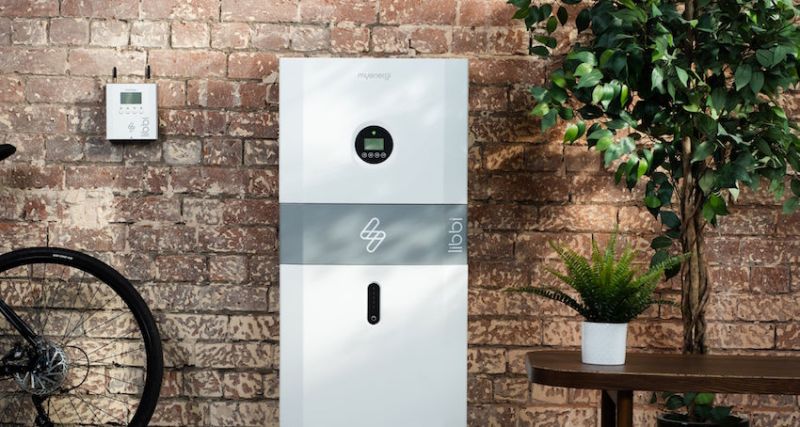
The ultimate step toward energy independence is capture and storage – solar panels to capture energy and a battery system to store it. Once stored, it can either be used when generation levels are low, or sold back to the grid during peak demand. Importantly, a sufficient solar and battery setup will significantly reduce the need to purchase electricity from the grid.
It is an idea that is quickly catching on. Indeed, according to the Microgeneration Certification Scheme (MCS), last year more than 1,100 home batteries were installed every month in the UK.[9] The benefits are further compounded for homeowners with an electric vehicle. If their home and daily driving are powered entirely by the sun, the long-term cost savings could be substantial.
When selecting a home battery system, working with a reputable and established supplier is essential. If considering a setup that includes a home battery, integration with heating, an electric vehicle charger, or other additional systems, a supplier with a robust technology ecosystem can simplify installation and operation significantly.
An interconnected system
While most microgeneration, storage and power diversion tech can work autonomously, they also work collaboratively as part of a connected ecosystem. This means that users with a suite of products can effectively choose how to generate electricity, plus where and when to send use it, whether to heat the home, to charge an EV, to store for later or anything in-between.
As we move towards a more decentralised, decarbonised and distributed energy system, environmentally and cost-conscious consumers will more and more play a vital role as they take further control of their energy generation and consumption. Interconnected devices will quickly become valuable energy assets and British homes will increasingly become more energy independent – significantly raising UK energy security while simultaneously lowering household carbon dioxide emissions.
For more information about myenergi and its latest range of eco-smart home energy tech, visit www.myenergi.com.
ENDS
[1] https://commonslibrary.parliament.uk/research-briefings/cbp-9714/
[2] https://www.ofgem.gov.uk/news/changes-energy-price-cap-between-1-july-and-30-september-2025
[3] https://moneyplusadvice.com/blog/tips-advice/the-expense-of-living-in-2025/uk%20personal%20debt%20increase%202025
[4] https://www.statista.com/statistics/1305038/great-britain-measures-taken-due-to-cost-of-living-increase/
[5] https://www.sunsave.energy/solar-panels-advice/solar-energy/statistics
[6] https://www.gov.uk/government/statistics/solar-pv-cost-data
[7] https://www.ibisworld.com/united-kingdom/industry/solar-panel-installation/14628/
[8] https://www.crgdirect.co.uk/how-much-do-solar-panels-save-on-electricity-bills
[9] https://www.renewableenergyinstaller.co.uk/2024/04/battery-storage-is-breaking-records-with-an-outstanding-start-to-2024/