At the 2024 World Hydrogen Congress in Denmark, Jorge Batarce, Global Hydrogen Lead at ABB Energy Industries, highlighted the role of collaboration and advanced technology in scaling up green hydrogen production and driving down costs globally, to contribute to the energy transition.

Jorge Batarce
Last month, leading hydrogen professionals from around the world gathered in Copenhagen, one of Europe’s most sustainable cities, for the World Hydrogen Congress.
Firstly, there is significant cause for optimism.
Hydrogen’s potential to play a key role in the energy transition has clearly been recognized in Denmark, which is strongly poised for hydrogen development and expected to be one of the top producers of low-emissions hydrogen in northwest Europe by 2030, according to the International Energy Agency. The Government has set a goal to install 4–6 GW of electrolysis capacity by 2030 to produce green hydrogen.
Globally, green hydrogen has a critical role to play as a new energy source to help decarbonize industry, especially in applications where it is unavoidable, such as ammonia for fertilizers, e-methanol for e-fuels for transport, and e-methane for power generation and heating. It also plays a key role in hard to abate sectors, such as iron and steel production, for the iron ore reduction process, as well as the pulp and paper and cement industries where its use is fundamental to the process for the reduction of CO2 emissions.
Furthermore, as an increasing number of power sources with fluctuating demand connect to the grid and electricity consumption becomes more distributed and unpredictable, clean hydrogen offers a solution. It enables the storage of renewable energy in large quantities for extended periods, contributing to grid stability.
However, there are hurdles preventing green hydrogen production at scale.
Currently, the two main hurdles are that supply volumes are too low and costs are too high. For green hydrogen to become more accessible and affordable, the Levelized Cost of Hydrogen (LCOH) needs to be competitive. To put this into context, around 70 percent of the total operating costs required to make green hydrogen are estimated to come from the renewable electricity needed to power the electrolyzers. For hydrogen to increase its role as a driver of decarbonization – and scale up to the gigawatt levels required – it must achieve cost parity with other processes.
To accelerate the hydrogen market, it is essential to rapidly scale up electrolyzer capacity to maintain momentum in green hydrogen projects. Expanding capacity will help reduce costs, which is crucial as electrolyzers represent the largest portion of capital expenditures (CAPEX).
Increasing electrolyzer capacity through a standardized approach
According to the International Energy Agency, more than 70 percent of the potential annual production of low-emission hydrogen (38 million tonnes a year by 2030) is based on electrolysis and low-emissions electricity, so it is critical to accelerate the scale of electrolyzer capacity to maintain this momentum. The ambition is there, with manufacturers announcing plans to expand to 155 GW per year of manufacturing capacity by 2030, an 11-fold increase from the approximate 14 GW available today.
ABB is committed to supporting the integration of electrolyzers into the process to enhance efficiency and optimize the LCOH. One approach to achieving this is by developing a standardized electrolyzer concept, which can lower costs and improve efficiency, thereby addressing the capacity gap. However, achieving success will require ongoing testing, as well as the combined expertise and seamless integration of all project partners and their products.
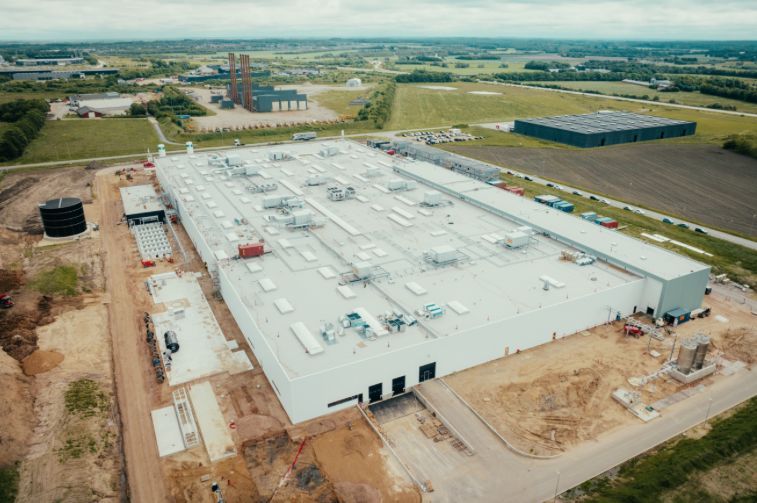
That’s why ABB has formed an alliance with Danish company Topsoe and US engineering and construction company Fluor, announced in June this year, to design a standardized concept for building Topsoe’s Solid Oxide Electrolysis Cells (SOEC) factory in Virginia, US. The project will apply lessons learned from building the first SOEC factory in Denmark to reduce costs, enhance safety and optimize project execution. Standardizing the approach will mean that operators will be able to better evaluate the performance metrics of these industrial systems, increasing transparency and providing a more balanced view of how efficiently an electrolyzer is working.
ABB supports our customers in this area with a tailored three-step process which assesses the design principles of the electrical architecture and the technology selection criteria. This allows for a standardized and modularized Balance of Plant (BoP), which includes everything upstream, downstream and around the electrolyzer. The BoP is the building block by which hydrogen projects are scaled, but it needs to account for a project’s specific need to achieve this.
Driving scale through global collaboration
ABB is working with partners around the world to automate, electrify, optimize and decarbonize industrial operations, especially in hard-to-abate sectors, in a leaner and cleaner way. At ABB we call this ‘Engineered to Outrun’.
By optimizing operations, we can unlock the economic and environmental benefits of green hydrogen. At ABB we believe that the greenest energy is the energy you don’t use, which is why last year we launched our energy management system ABB Ability™ OPTIMAX® specifically for green hydrogen. It strategically directs energy flows and assets to ensure that industrial processes run in the most efficient way possible with minimal losses, helping reduce energy costs by up to 20 percent.
ABB is proud to be involved in the world’s first dynamic green power-to-ammonia plant, in West Jutland, in partnership with Skovgaard Energy, Topsoe, and Vestas. We are responsible for the electrical integration and advanced process control of the plant, which was officially inaugurated in August 2024. It operates in a highly dynamic mode, which means that production is enabled only when renewable energy, in this case wind power, is available and gears down when no renewable energy source is present. This allows it to adapt to fluctuations in energy supply and differentiates it from other types of power-to-X plants, which are directly connected to the grid.
It is an important development for the region in enabling stable and reliable control and integration of renewables to power low carbon fuel production facilities. Also, if scaled it is expected a lower OPEX can be achieved, which can provide a blueprint to build more dynamic and cost-optimized plants in the future.
Earlier this year, we signed an agreement with Green Hydrogen International to support its major Power-to-X green hydrogen project in Texas. Set to produce 280,000 tons of green hydrogen per year, the project – powered by behind-the-meter solar and onshore wind energy – will store up to 24,000 tons of green hydrogen in an underground salt cavern, ready for shipment via a 120km pipeline to an ammonia production facility for conversion and export to Europe and Asia.
In conclusion, progressing the global energy transition at pace and at scale requires collaboration and balance between existing and new technologies, driven by partnerships that span the entire energy value chain. I am optimistic that with continued collaboration and knowledge-sharing, we can leverage the latest process and technology innovations to reduce production costs – ensuring green hydrogen and its derivatives will play an important role in the global clean energy mix.