
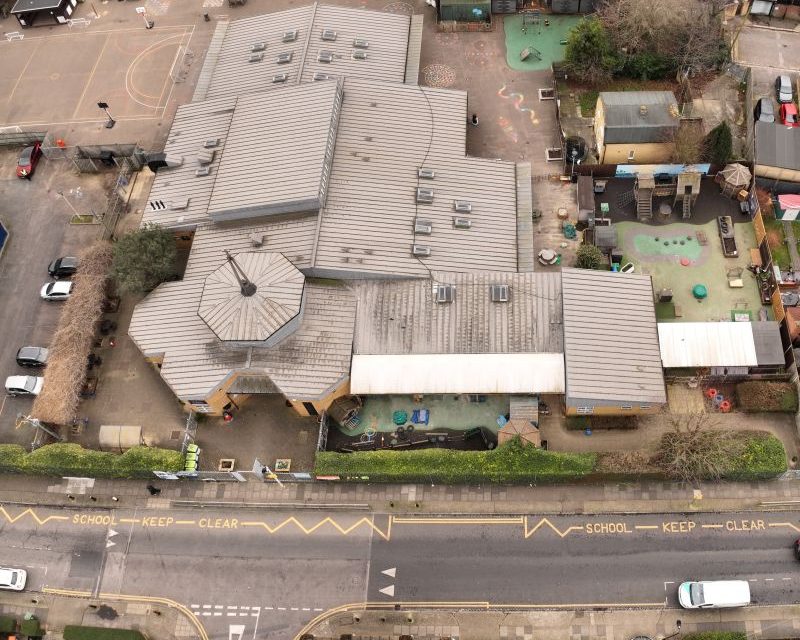
E.ON Next’s investment in a ‘solar sharing’ pilot project based around an East London community is designed to show how local energy sharing can reduce bills and emissions.
It works by generating solar power at St Luke’s Church of England Voluntary Aided (CEVA) Primary School in Canning Town which is used in the school, and any surplus allotted to nearby homes at a discount. Instead of a physical connection between the school and homes, half-hourly metering data will ‘match’ consumption and production, applying a credit to customers’ bills for the solar energy they use.
The project is a blueprint for more sustainable and efficient energy but E.ON has warned current regulations prevent wider use. The company is calling on the Government and the energy regulator to support the expansion of such innovative projects by updating regulations and policy costs.
E.ON argues that removing social and environmental levies from local power sharing agreements, and reflecting the advantages the projects deliver through network charges, would support further investment. This approach would allow communities to harness the potential of a cleaner energy system and make the Government’s local power ambitions commercially viable.
“The energy transition is about making energy more affordable and sustainable, and through our commitment to leading the transition to new energy in a way that works for everyone, we’re proving community projects can reduce costs for many people, as well as cut carbon and increase the UK’s energy resilience,” said Ramona Vlasiu, Chief Operating Officer at E.ON Next. “Our Newham pilot aims to prove the concept that sharing energy brings cost and environmental benefits, but we need to change the rules to jump start the expansion of projects like this to communities nationwide.
“We need to recognise and promote 21st century solutions where we can generate and share renewable energy locally, avoiding the need for infrastructure investment and passing savings to consumers.”
St Luke’s CEVA Primary School in Canning Town is in the Diocese of Chelmsford. The Right Reverend Roger Morris , the Bishop of Colchester and Chair of the Diocese of Chelmsford’s Diocesan Board of Education, said: “We have so much to learn about how we can meet our energy needs without destroying the planet. The children at St. Luke’s CofE Primary School in Newham will be among the new generation of innovators and developers who will lead us through the next stages of this technological revolution – and this project will give them the impetus and inspiration they need. The fact that a place of education is at the centre of this exciting partnership with E.ON could not be more appropriate.
“By loading additional costs onto the cost of electricity, we have sadly made the fuel of the future more expensive than its fossil fuel alternatives. This project is a reminder of the sheer abundance of solar energy and the relatively low cost involved in harnessing that energy for our use.“
Projects like these provide wider benefits to the energy system by generating energy in areas of high demand, where the power remains in the local network. E.ON argues it should be exempt from the policy levies and those benefits should reduce network transmission charges.
How it works
E.ON will fund, install and maintain 270 solar panels at no upfront cost to the school, generating c100,000kWh a year – enough to cover more than 50% of the school’s expected energy consumption and the equivalent of 37 average UK homes.
The school benefits from renewable electricity and any surplus (e.g. after school and at weekends) is ‘shared’ with participating homes nearby at a discount. The solar also provides a return on the initial investment.
This approach is expected to save the school and community more than £7,000 a year.
More information can be found at eonnext.com/community-energy
More solar stories can be found here.


