Only 10% of countries have net zero targets in law, according to the zero carbon tracker project. That might make you think that the pressure is off when it comes to the transition to a clean energy system. But the same analysis shows that forty per cent of countries have made firm policy statements on net zero, so the political and public expectation for action has been set.
Even at this time of disruption to international energy markets, energy remains a key area where net zero ambitions can be realised. But as those of us working in the sector know only too well, the transformation we need to see is not as simple as plugging in and switching on.
As countries become more focused on cutting emissions, a trend that is increasingly significant is DER – Distributed Energy Resources, a broad range of new energy assets more local to consumers. How such assets are managed is going to be crucial as the scale increases. With more renewable and DER assets connected to our grids, we are well on the way to a decentralised and flexible approach to energy. With many more sources of power and storage scattered around the country, it’s a complete turnaround from what we’ve been used to – a handful of big centralised fossil fuel plants.
Managing this new set up calls for DERMS – Distributed Energy Resource Management Systems. DERMS monitor and integrate low carbon technologies and DER assets of many types, such as renewable energy generation, flexible loads such as electric heating and EV charging and energy storage. The flexible management of all these assets is vital in balancing supply and demand.
So what should system operators, distribution utilities and energy asset owners look for when considering DERMS?
Essentially, DERMS can be thought of as the connectivity between all these different physical assets and systems and a wide range of new energy actors. They provide the necessary data, communications and control infrastructure to manage the energy assets and their interactions with customer activities, the distribution grid and energy markets.
DERMS can rein in surplus production when demand is low, when grid constraints emerge or to ensure generation output when it is needed. They can optimise the activation of storage, for example the batteries within EVs, to address surpluses, deficits and price changes.
DERMS come in a number of different forms, depending on whether you’re looking to manage a fleet of vehicles or something bigger such as a microgrid. But there are common features, such as being able to monitor, schedule, dispatch and control resources.
One issue to consider is network security. Because DER assets can be managed in real-time based on live energy system conditions, there is a direct relationship between the speed of control and the level of grid access and market opportunity for customers. Slower control tends to lead to greater operating margins and reduced grid access. This is crucial for efficient use of existing network infrastructure and to avoid lengthy and expensive customer connection and headroom pathways.
DERMS can also act as the coordination point for fast, secure and effective control of all flexibility within distribution networks. Real-time flexible management of generation connections is often badged ‘ANM’ (Active Network Management). So-called ANM connections or flexible connections help avoid overloading the network and get around the need for costly grid upgrades and long-connection times.
Increasingly, grid supporting services will be provided by DER assets, which will require Distribution System Operators (DSOs) to adopt roles more like the energy markets and system operators of today. DSOs will build and use larger portfolios of flexibility from customer connected equipment. Eventually we will see the full range of generation, demand, customer and storage flexibility orchestrated through DERMS.
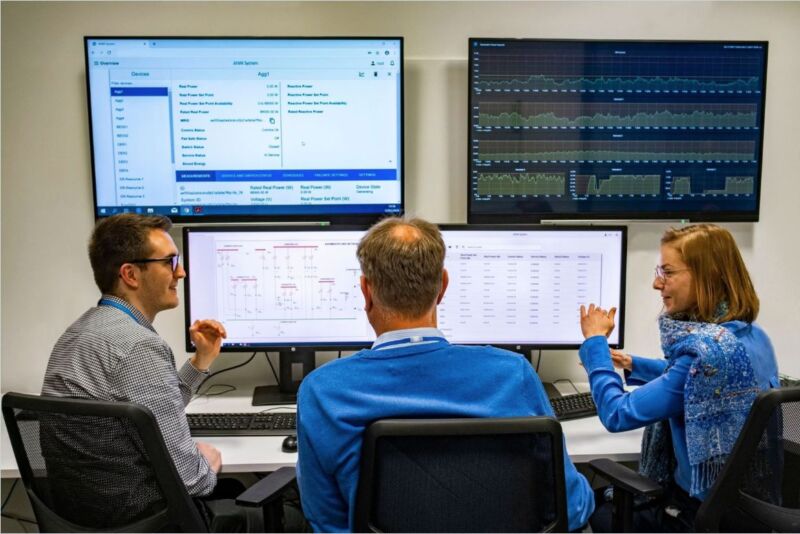
In order to create a smarter and more flexible system, DERMS software must be able to integrate with other operational systems already in place; for example, advanced distribution management systems (ADMS) in distribution utilities and various information and market interfaces. This means that control room operators can operate a network through ADMS while the DERMS can monitor and control the DER autonomously. Such integration will allow network operators to scale up with ease.
As DERs become more prevalent and load patterns and technologies change, DSOs are becoming more reliant on high quality operating forecasts so that they can schedule service provision to meet demand. This creates opportunities for EV and battery owners, as well as flexible loads and wind farms, to deliver, store and flex power as needed. Forecasts are becoming a core requirement of all DERMS.
The data captured by DERMS can be used by a wide variety of interested parties to report on past performance but also to better anticipate future events and opportunities.
When it comes to net zero, DERMS technology provides scope for scalability and flexibility from low carbon energy technologies. By managing grids in a smart way, everyone benefits from the transition away from fossil fuels and toward clean sources of electricity.
The road to net zero can be smoother and less expensive than some had feared, if we embrace the idea of distributed energy and the management systems required.
Author: Alastair Newens is Business Development Director at Smarter Grid Solutions