The ability to monitor power factor (PF) can be extremely useful in planning and implementing energy saving initiatives.
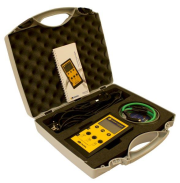 The Tinytag Energy Logger from Gemini Data Loggers is cost-effective, non-invasive and easy to use: it monitors single and three phase power usage, and power factor, and can be used for spot checks or left to record for longer periods to help build up energy profiles.
What is Power Factor?
Power factor is a measurement of how efficiently electrical power is consumed. In high consumption premises, the operation of plant and equipment and even fluorescent lighting can introduce varying levels of electrical inefficiencies in the form of additional currents called ‘inductive reactive currents’ into a site’s electrical supply.
The power dissipated in a load is the product of the voltage and current. If a load is purely resistive, the voltage and current are in phase and all the power can do useful work. If a load has a reactive component (i.e. has capacitance or inductance) the voltage and current are not in phase. The reactive load causes current to flow but it can do no useful work.
 The relationship between resistive (real) power and reactive power can be described by the power factor or phase angle. A purely resistive load has a power factor of one and a phase angle of zero (i.e. there are no electrical inefficiencies). A purely reactive load has a power factor of zero and a phase angle of 90.
Most loads have a component of each: ideally in terms of consumption, electrical efficiency would be around 1.00 PF (100% electrically efficient), however in a typical commercial or industrial site this inductive loading can cause it to be reduced to around 0.80 (i.e. 80% electrically efficient).
The Effect on Electricity Costs
If a load has a low power factor, more current must be supplied by the utility company than is actually needed. This means heavier equipment, inefficient use of energy and adding to the cost of electricity. Organisations with a poor power factor are likely to be charged a premium for power by the utility company. When it falls below a set figure, electricity companies will have to supply extra (kVA) to make up for the loss caused by poor power factor. They will often apply an additional charge to the KW being consumed, or the whole supply may be charged as kVA.
In addition to saving energy and reducing costs, as the power factor of a system is improved, the release of electrical capacity means that the total current flow will be reduced. This permits additional loads to be added and served by an existing system.
Choosing the Correct Energy Data Logger
 The Tinytag Energy Logger measures both voltage and current usage and correlates the timing between the two to measure the power factor. This enables corrective measures to be introduced which can target the inductive reactive currents, counteract the inductive element of the load and increase electrical efficiency to nearer the ideal target of 1.00 power factor. Power factors can be corrected/improved by the installation of newer equipment including dedicated integrated circuits, or installing specialist equipment.
Gemini Data Loggers
01243 813000