
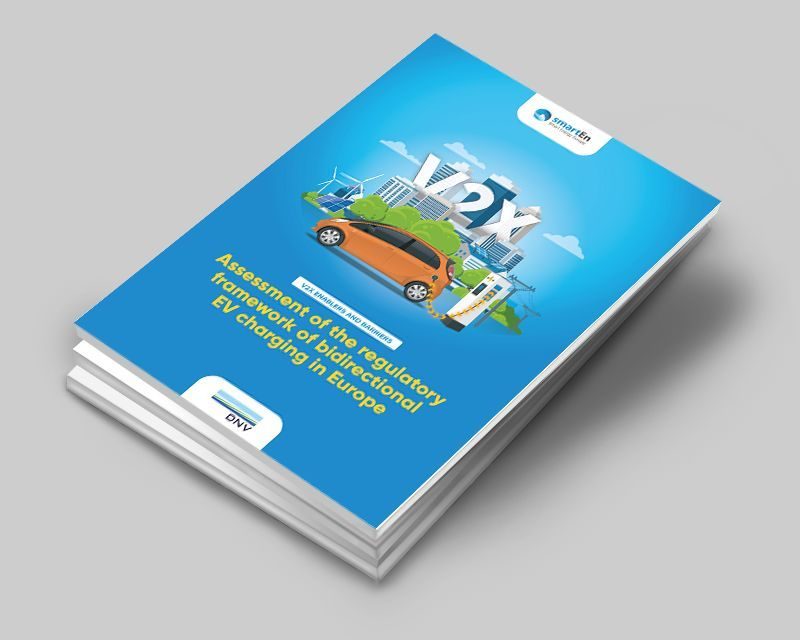
As Europe grapples with an increasing need for energy flexibility, a ‘first-of-its-kind’ report, co-sponsored by the intelligent power management company, Eaton, sheds light on the regulatory frameworks in 11 European countries for the crucial energy storage resource offered by bidirectional charging (V2X) of electric vehicles.
The report, conducted by smartEn – Smart Energy Europe and the independent consultants from DNV, was launched at an event that brought together an audience of 150 high-level policy and business stakeholders. It offers a deep dive into the ‘enablers and barriers’ to bidirectional charging, examining a range of aspects including electric vehicle and charging station developments, regulatory and market access conditions, as well as grid and system considerations. It underlines the overlooked significance of mobile small-scale energy storage solutions in addressing the grid constraints that electrification and the growth of variable renewable energy resources will bring and affirms the critical role that bidirectional charging can play in Europe’s clean energy transition.
Michael Villa, smartEn Executive Director, stated: “When addressing the increasing energy storage needs for our clean transition we cannot focus only on large utility-scale assets. We lack an EU enabling framework for bidirectional EV charging and the fragmented national rules of some Member States prevent a wide-scale, commercial adoption of V2X. Double taxation of energy remains one of the biggest barriers for bidirectional charging development, while inconsistent market access or the lack of dynamic prices are generally akin to challenges faced by other demand-side flexibility resources”.
In line with a recent calculation of the €9.9 billion in benefits resulting from V2X activations across the EU27 by 2030, the smartEn report emphasises that unlocking bidirectional charging’s potential is a key development in achieving an efficient energy transition relying on all decentralised energy resources, including non-dedicated assets from the transport sector. The report was co-sponsored by Eaton, Enel X, ev energy, Octopus Energy, The Mobility House, Elli and tiko.
Fabrice Roudet, general manager, Energy Transition, Eaton, said: “In its conclusions, this report highlights the fact that complicated uncoordinated technical requirements across countries are amongst the key barriers to V2X. We manufacture EV chargers and supply EV charging infrastructure to customers across Europe, so we are acutely aware that businesses and consumers need clarity from governments and policymakers on the end-vision for bidirectional charging across Europe. Without this, as the report says, EVs could be stranded assets 90% of the time when the vehicles are parked idle, and this is potentially a huge waste of the energy flexibility that Europe needs to balance variable renewables on the grid.”
The full report is available for download on the smartEn website.


