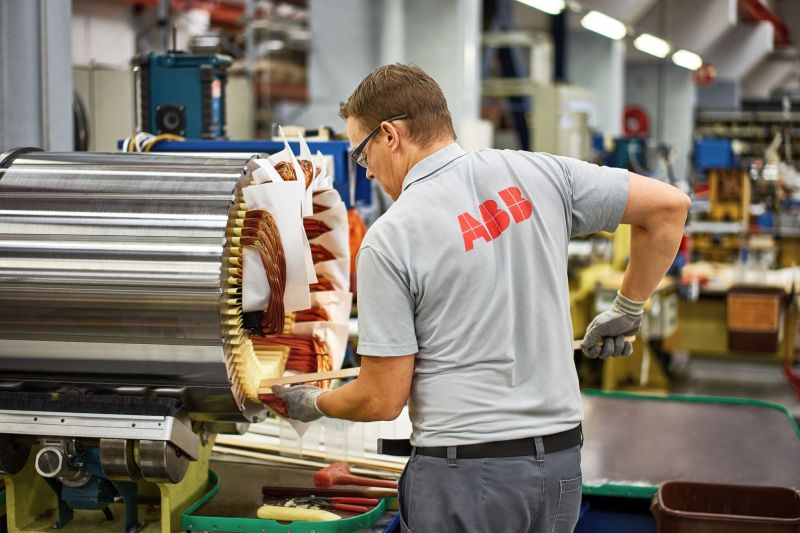
As a leader in high-efficiency electric motors, ABB IEC Low Voltage (LV) Motors, offers reliable energy-efficient motors for various industries including metals, chemicals, cement and mining, food and beverage. Recently, it has raised the bar with the introduction of synchronous reluctance (SynRM) motors that meet the anticipated IE6 “Hyper-efficiency” level. They offer a simple, cost-effective and magnet-free solution for the majority of applications.
Electric motors keep industries, processes, and applications in constant, productive motion. They also consume over 45 percent of global electricity, and the number of motors is projected to double by 2040. It has been estimated that if the more than 300 million industrial electric motor-driven systems currently in operation were replaced by high-efficiency, optimized alternatives, it could reduce global electricity consumption by as much as 10 percent.
ABB is in line with the Science Based Targets initiative (SBTi) Net-Zero Standards committed to reaching an 80 percent reduction of its Scope 1 and 2 greenhouse gas (GHG) emissions by 2030 and eliminating them fully by 2050. To do so, initiatives such as transitioning to renewable energy sources, investing in energy-saving technologies like heat pumps, and installing solar power systems across its operating sites are at the core of their strategy.
ABB IEC LV Motors recognizes that, as part of this commitment and considering its leadership role, it also needs to “walk the talk” by implementing best practices for energy efficiency across its own operations.
Real-Life Impact and Progress
Established in 1944, the IEC LV Motors site in Vaasa, Finland is its oldest active facility. Spanning two buildings across 36,000 square meters, Vaasa has taken significant strides towards net-zero targets with a notable heat recycling initiative. Excess heat from processes such as cooling devices, heating, ventilation and air-conditioning (HVAC) systems, and painting systems is repurposed for warming the facility, cutting energy consumption by 7,100 MWh – enough to power around 500 small households. Integrating building automation systems and upgrading to LED lighting on the campus saves an additional 2,800 MWh per year.
Continuing the trend towards reducing environmental footprint, the Faridabad facility in India inspires with its adoption of renewable energy sources and energy-efficient operations. A 330 KWp grid-synchronized rooftop solar plant has been implemented within the facility, to increase renewable power usage for its own operations. The site is also outfitted with high-efficiency IE3 and IE4 motors. With various sustainability initiatives, the Faridabad facility boasts a platinum rating, under the Green Factory Building rating system from the Indian Green Building Council and is working towards becoming a ‘water-positive’ facility (which means replenishing a greater quantity of water for the environment than it uses for its operations).
Also in India, the Bangalore site that caters to specialized customer needs for a range of LV Motors has demonstrated its sustainability commitment by implementing energy-efficient solutions such as building automation technology, energy-efficient lighting, and HVAC systems. Furthermore, the site is certified as ‘water-positive’ and over 98 percent of the waste generated at the site is recycled, advancing our commitment to promoting circularity initiatives.
As the second largest of all IEC LV Motors sites, the Shanghai campus in China has complete LED lighting across its 87,000 square meters. Since 2023, the Shanghai campus has replaced 80 of its low-efficiency motors used in production lines and related equipment, with high-efficiency IE4 motors, saving around 100,000 kWh of electricity. The site also has a significant 3.1MWp solar installation, underscoring its commitment to renewable energy and a reduced carbon footprint.
Across all the division’s sites, their combined efforts have reached an 84 percent reduction in Scope 1 and 2 GHG emissions in 2023, from its 2019 baseline. In terms of energy consumption, IEC LV Motors achieved a 9 percent reduction compared to 2022.
Commitment and Action
The commitment of ABB IEC LV Motors to low-carbon operations is evident through its initiatives, goals, and real-life impact. By combining ambitious targets with practical measures, the division set an example for others seeking to address climate change. Through investments in renewable energy, energy-efficient practices, and the adoption of cutting-edge technologies such as high-efficient motors and own site resource generation, ABB IEC LV Motors has made considerable strides in reducing its carbon footprint.
Results at the manufacturing sites serve as examples to businesses of how environmental responsibility and commercial success can go hand in hand. This journey toward sustainability highlights the growing realization across industries that businesses must lead by example to foster a sustainable future, bridging the gap between promises made and actions taken in operations.