Many of the countless stories focused on climate change all share a singular villain: carbon.
Carbon – specifically carbon dioxide – is central to the environmental conversation. Businesses market themselves to consumers as carbon neutral, technologies like carbon capture are touted as major breakthroughs, while phrases like ‘carbon footprint’ are part of our cultural lexicon. This is good news for the fight against climate change, as carbon dioxide poses a serious long-term risk to the future of the planet.
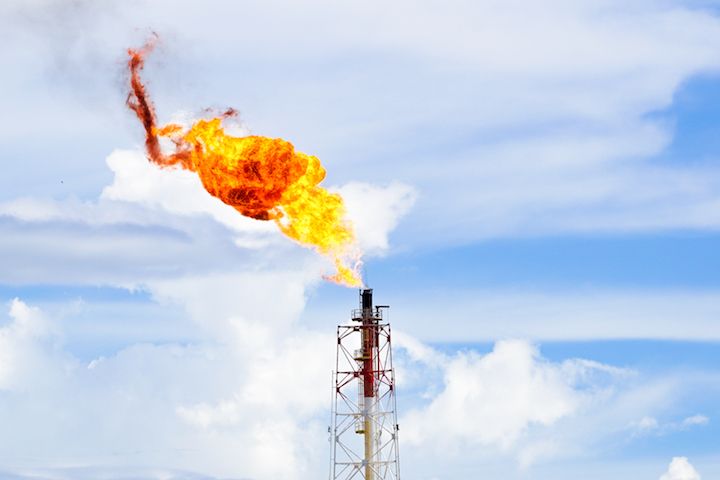
However, this focus on carbon means that another emissions threat has – until now – slipped largely under the radar: methane. Even the oil and gas industry, a sector forced to continually focus on and invest in reducing harmful emissions, appears to have overlooked the risk posed by methane given the continued prevalence of gas flaring and venting at sites around the world.[1]
Thankfully, there are signs that the world is waking up to this invisible threat. And the downstream oil and gas sector has the power to be the hero that conquers this new threat – but it must change the way it thinks about methane leaks for good.
An invisible threat
Methane emissions represent one of the largest threats facing humankind today. Since the Industrial Revolution, this invisible gas has been responsible for approximately a third of the recorded rise in global temperatures.[2] Without immediate action, emissions from human sources are projected to increase by up to 13% in the next six years, causing significant and irreparable harm to the planet.
In terms of trapping heat, methane is much more potent than carbon dioxide and other greenhouse gases – but only for a relatively short time. When first emitted, methane traps roughly 100 times more heat than carbon dioxide. However, it also starts to break down more quickly, while carbon dioxide can persist for around a century. Over the course of 20 years, methane traps around 80 times as much heat as carbon dioxide. Over a century, that number drops to 28 times[3] – still significant, but its impact is blunted enough to allow mitigation to take place.
In other words, while methane emissions are dramatically accelerating our climate towards the 1.5°C warming threshold, beyond which scientists agree the environment would suffer irreparable damage, cutting emissions can reverse our course just as quickly.
Approximately 60% of all methane emissions are caused by human activity, and a third of this is produced by the energy sector through flaring, venting, and leaking infrastructure.[4] Estimates suggest that halving these emissions over the next 30 years will be instrumental in meeting the critical goal of reaching global net zero emissions by 2050.
Urgent action is needed – and the world is starting to wake up to the scale of what is required.
Wake up and smell the methane
Last December, representatives from major oil and gas companies around the world committed to action that will cut methane emissions by at least 30% by 2030. The Global Methane Pledge (GMP), made at the COP28 summit in Dubai, promises a huge leap forward in the fight against climate change. Partners of this agreement have announced that more than $1 billion of new grant funding will be allocated to support action against methane – more than three times the pre-existing funding levels – and individual action is ongoing to reduce the impact of these harmful emissions further.
Over 150 nations have signed up to the GMP, a commitment to cut human-related methane emissions by 30% by the end of the decade. Included in the pledge is the prospect of financial penalties for businesses that fail to act. The US, for example, plans to introduce a fine of $900 per tonne of methane emitted this year, which will rise by 67% to $1,500 per tonne in 2026.
Perhaps the most important commitment made at COP28 is the launch of the Data for Methane Action campaign. The Global Methane Hub plans to increase the funding available to governments to take advantage of previously unleveraged data. Alongside the full launch of a new Methane Alert and Response System (MARS), energy suppliers could soon have access to a suite of tools and funding to reduce gaps in their understanding of where emissions are occurring, enabling them to act as never before against this invisible threat.
Firm action at the political level – of the kind we saw at COP28 – was sorely needed. But all industries must do their bit to help deliver on these pledges, and few have the same potential to make a difference as the oil and gas industry.
A clearer picture
To back these pledges up with action, oil and gas operations need better quality data than is currently available. Limitations in the data on methane emissions have effectively hidden the scale of the problem, preventing optimised action from being taken. For the downstream, this is particularly important, as this segment is responsible for 20% of fossil methane emissions on its own.[5]
Of course, solving this is easier said than done. The GMP saw several new signatories at COP28, including Kenya, Angola, and Turkmenistan, the latter of which in particular has been highlighted as a methane ‘super-emitter’. More than 5,600 super-emitter events have been recorded by UN research since 2019, with little overall reduction observed among many GMP signatories. In certain countries, emissions have even increased.[6] In 2022, two oil and gas fields alone in Turkmenistan were responsible for more global warming than all carbon emissions released by the UK that year.[7]
Most oil and gas operators oversee many thousands of miles of pipelines, rendering manual checks impractical at best and expensive, ineffectual time sinks at worst. As a result, leaking pipelines have been widely accepted as a regrettable cost of doing business for decades.
This cost should not be as high as it currently is. In the Guardian’s major investigation of super-emitter events, the largest it found was from a major pipeline near Turkmenistan’s Caspian coast. While little is known about the secretive country, Turkmenistan is believed to rely on ageing Soviet-era infrastructure, highlighting how severe pipeline leaks can be if left unattended.
This is why the announcement of the MARS at COP28 is so promising for the industry. Recent years have seen rapid progress in satellite tracking and other modelling techniques that have significantly enhanced the capacity of oil and gas producers to collect data on their emissions beyond the upstream. Now, for the first time, it is economically feasible to monitor emissions from pipelines, refineries, and storage facilities thanks to systems like MARS. In collaboration with the Copernicus space programme, it represents the first global system that connects satellite-detected methane emissions with trackable notifications.
In a pilot phase that ran throughout 2023, MARS identified more than 1,000 methane plumes from energy production and linked 400 of these to specific facilities. Tools such as this are changing the picture of emissions and expanding the available approaches to ensure compliance with global commitments on methane.
This new tool is being supported by a worldwide campaign to encourage more comprehensive data collection. The Data to Methane Action campaign aims to improve the funding available to governments and businesses to enable radical reductions in methane emissions by targeting leaks and policy change. It is supported by satellite monitoring systems and scientific monitoring campaigns, providing transformational tools to help the energy sector scale up its efforts.
There are rewards for engaging in abatement strategies that go far beyond legal compliance, however. The IEA estimates that around 80% of methane emissions could be avoided at no net cost, because the cost of preventing the leaks will be offset by the market value of the captured gas – with downstream leak detection and repair (LDAR) being the most valuable. As energy prices around the world remain high, every molecule of methane leaked into the atmosphere is worth more than it ever has been.
Action on the ground
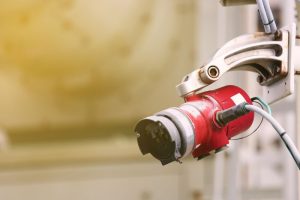
While oil and gas businesses wait to benefit from the monitoring systems announced at COP28, they can pre-emptively improve their emissions profiles by taking action on the ground. Thanks to technological advances, businesses today have access to a suite of monitoring solutions for identifying where leaks are occurring, chief among which are high-performance infrared (IR) sensors. These small devices generate beams of IR light that pass through a filter inside a sampling chamber that blocks certain wavelengths.
This means that only the desired wavelengths make it through the filter to a detector, which measures the attenuation of the light it receives to determine the precise concentrations of gases that may be present. Changing filters enables different wavelengths of light to reach the detector, which can, in turn, be used to check for different kinds of gases.
Certain gas analyser instruments incorporate laser diodes mounted on a thermo-electric cooler. This enables the laser’s wavelength to be tuned to match the absorption wavelength of a particular molecule, resulting in enhanced sensitivity and discrimination. These instruments benefit from a lower risk of false alarms, which can plague other common gas detection technologies.
These advanced emission tracking devices mean leak prevention is no longer a hypothetical concept. Supported by the growing groundswell of funding to improve monitoring solutions, today’s energy suppliers have a wealth of options available to track harmful leaks and start to address them.
For too long, the problems caused by invisible gas leaks have remained unseen. Now, the technology is widely available to address those problems, and there is the political will to use it. All that remains is for the oil and gas industry to capitalise – and 2024 could be the year our climate fightback begins.