With 2025 looming, a new year brings hope for change – yet much remains the same. For the oil and gas industry, tackling methane emissions continues to hover between hope and inertia.
The 2023 COP28 climate summit saw multiple pledges to at long last tackle the problem of methane emissions from the fossil fuel sector. A raft of sweeping measures and financial investments were announced, including the UN Methane Alert and Response System (MARS) – that indicated the industry may have at last turned a corner. Although reports made it clear that progress was slow, it seemed like the major players involved were at last waking up to the issue at hand.
Yet 2024 told a different story. By the time COP29 had convened in Azerbaijan, optimism had dimmed. A UN Environment Programme (UNEP) report released at the event showed that despite having access to modern emissions monitoring technology, the biggest methane super-emitters are failing to act when notified.[1] Too many oil and gas operators demonstrate a worrying lack of urgency over the methane crisis, and as a result, global climate targets appear increasingly out of reach.
With the deadline to bring emissions under control fast approaching, it is clear that engagement with emissions monitoring tools has not kept pace with commitments. Now, 2025 begins with a critical question: will this be the year that the energy sector finally turns a corner on methane, or will it be more of the same?
Slipping targets
Methane emissions are rising faster than the action needed to curb them, putting global climate targets at risk. According to the Global Carbon Project’s Global Methane Budget 2024,[2] atmospheric methane concentrations have increased steadily over the last few decades and now stand at 1,931 parts per billion. This level is 2.6 times higher than before the Industrial Revolution, and is broadly incompatible with the Paris Agreement’s commitment of limiting global temperature rises to 1.5°C. Failing to reduce emissions today will mean missing this target, and could potentially put the world on track for a 3°C temperature increase by 2100.[3]
The fossil fuel sector is has a particularly large responsibility in this regard, accounting for nearly 40% of methane emissions from human activity. However, this also means that the industry holds enormous potential for addressing the methane challenge. With a growing number of tools at its disposal, the energy sector has everything it needs to cut emissions once and for all – except, it seems for the ability to match commitments with action on the ground.
What has changed in the last year?
2024’s COP28 conference saw representatives from across the oil and gas industry collectively pledge to reduce methane emissions. At this event, a series of measures were introduced, including over $1 billion in grant funding for abatement measures, the launch of the Data for Methane Action Campaign, and the full launch of the UN MARS. Several new companies also signed up for the Oil and Gas Methane Partnership (OGMP) 2.0, and more signatories joined the Global Methane Pledge bringing the total to 158 countries that have committed to reducing anthropogenic emissions by 30% by the end of the decade.
However, it has become increasingly clear that these commitments and tools have not translated into effective action. With the Global Methane Budget 2024 highlighting that the world may be moving in the wrong direction on emissions, industry bodies have indicated that further action is urgently required. Nowhere is this need highlighted better than in the UNEP’s report, An Eye on Methane, which was released at COP29. The UNEP acknowledges that accurate data on methane emissions is key to addressing this problem, and launched the MARS last year to support its goal of improving the quality of data on oil and gas operations.
The MARS is a collaboration with the Copernicus space programme that connects satellite-detected methane emissions with trackable notifications. In its 2023 pilot phase, it identified more than 1,000 methane plumes from the energy sector, with 400 of these linked to specific facilities. This tool was supported by the Data for Methane Action Campaign, which aimed to improve the available funding for methane reduction measures in the industry.
The UNEP report shows that data provided by these tools has not been consistently converted into action on the ground. The MARS issued 1,225 alerts in its first year when sufficiently large methane emissions were released that could be detected from space.[4] However, the businesses responsible only took measures to address the leaks around 1% of the time, and the growing nature of this threat means that there is little room for inaction.
Signs of progress
That is not to say that all operators are responding in the same way. The OGMP has demonstrated that there is significant appetite among the industry for action, with businesses covering 42% of global oil and gas production now signed up to the scheme. In parts of the world this is translating to tangible results on the ground – for example, MARS notifications in both Algeria and Nigeria led to prompt action from governments and oil and gas companies alike.[5] In Algeria, MARS notifications have enabled reductions in annual emissions equivalent to 500,000 cars being taken off the road. In Nigeria, not only could the leak be fixed in under two weeks, doing so had the impact as removing 400,000 cars from the road.
Further progress has been seen with the launch of the OGMP 2.0’s ‘Gold Standing Reporting’ status in 2024. This initiative recognises those companies that best track their emissions levels, with 55 having already received this status and 41 more having started the agreed Gold Standard Pathway. Certification like this can play a vital part in improving the quality of data on methane, enabling better targeted action to prevent leaks and repair aging infrastructure, and should be a priority for others in the industry.
Additionally, this year’s COP29 event has provided a new tool that could support the oil and gas industry in achieving its emissions reduction goals. The European Commission’s Methane Abatement Partnership Roadmap (MAPR) provides a blueprint for cooperation between fossil fuel importing and exporting countries, to better improve monitoring, reporting, and verification systems for methane emissions. The roadmap focuses on improving monitoring, reporting, and verification systems to reduce methane emissions, recognising the crucial role of accurate data in driving effective action. By matching this support with simple action today, the industry has the potential to make a real difference on methane.

A clear path forward
There are several measures for reducing methane emissions that oil and gas operators could introduce today, many of which could be implemented at little to no additional cost.[6]
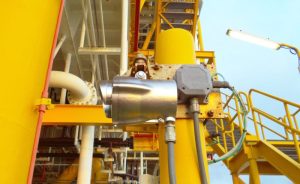
Embracing advanced measurement technologies should be a priority for any companies looking to act on methane. State-of-the art techniques such as laser-absorption spectroscopy, powered by high-performance infrared filters, make it simple to detect gases with sensitivity in the parts per billion range. With such equipment, oil and gas operators can implement a continuous monitoring network across their infrastructure, rapidly identifying leaks before they escalate and enabling them to schedule preventative maintenance. Similarly, modernising equipment and infrastructure will further help to eliminate leaks.
Although some businesses may be put off by the cost of investing in detection technology, methane abatement is actually one of the most cost effective methods for reducing greenhouse gas emissions. According to the International Energy Agency (IEA), around 40% of all fossil fuel methane emissions could be avoided at no net cost to businesses, because the market value of the captured gas is higher than the required spent on prevention measures.
This technology should be supported with ambitious reduction targets, and companies should establish and commit to goals that aligning with or exceeding international targets such as the 30% reduction by 2030. Participation in industry initiatives like the OGMP 2.0 and actively contributing to data sharing and best practises will also be essential for accelerating progress across the sector, helping companies establish their protocols for ensuring rapid responses to methane leak notifications, such as those provided by the MARS programme.
A call for immediate action
The announcements made at COP29 have reinforced the urgent need for the oil and gas industry to take decisive action on methane emissions. While progress has been made in establishing frameworks and initiatives, the pace of actual emission reductions falls short of what is required to meet global climate targets.
The industry stands at a critical juncture. By prioritising improved measurement techniques and implementing comprehensive strategies for methane abatement, oil and gas companies can play a pivotal role in mitigating climate change. The technologies and knowledge needed to make significant reductions are available; what’s required now is the will to act swiftly and decisively.
As the deadline for action on the environment approaches, the success of global efforts to combat climate change will depend heavily on the oil and gas industry’s commitment to addressing methane emissions. The time for half-measures and delayed action has passed. The industry must embrace its responsibility and lead the charge in creating a more sustainable resilient future. 2025 must be the year that ambition translates into action, setting the stage for a more sustainable and resilient future.
ENDS
[1] UN Environment Programme (2024), An Eye on Methane: Invisible But Not Unseen
2 The Global Carbon Project (2024), The Global Methane Budget 2024
3 The Global Carbon Project (2024), The Global Methane Budget 2024
4 UN Environment Programme (2024), An Eye on Methane: Invisible But Not Unseen
5 UN Environment Programme (2024), An Eye on Methane: Invisible But Not Unseen
6 International Energy Agency (2024), Global Methane Tracker 2024