Technology for municipal services is one of the focal themes at IFAT in Munich. The next edition of the trade fair for environmental technologies, taking place from May 30th to June 3rd, 2016, will show that the manufacturers are coming up with ever new answers to the changing conditions encountered by the users.
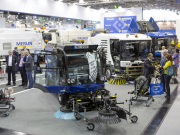
According to the cleaning and municipal technology supplier Hako, it’s not only the industrialized countries that are interested in multifunctional equipment, it’s also increasingly the developing nations.
Dr. Olaf Heinemann, Product Manager in Municipal Services Technology at Hako, explains: “In developing countries the urban settlement structures are increasingly like those found in Europe, and the standards expected in the care of urban spaces are ever higher; both these factors are boosting interest in multifunctional machines. Simple operation without any language barriers, single-button operation and attachment recognition all facilitate rapid implementation.”
And there are further developments that can promote sales of these versatile all-round vehicles. According to the VKU (Verband Kommunaler Unternehmen), the German association of public utility companies, many cities and local authorities in Germany, for example, are now asking the municipal cleaning services to also take on the job of clearing the pavements, although in many local authority areas in Germany, this is the responsibility of the residents. The VKU sees this trend as boosting the market in particular for multifunctional equipment, below 3.5 tonnes in weight and suitable for use on pavements.