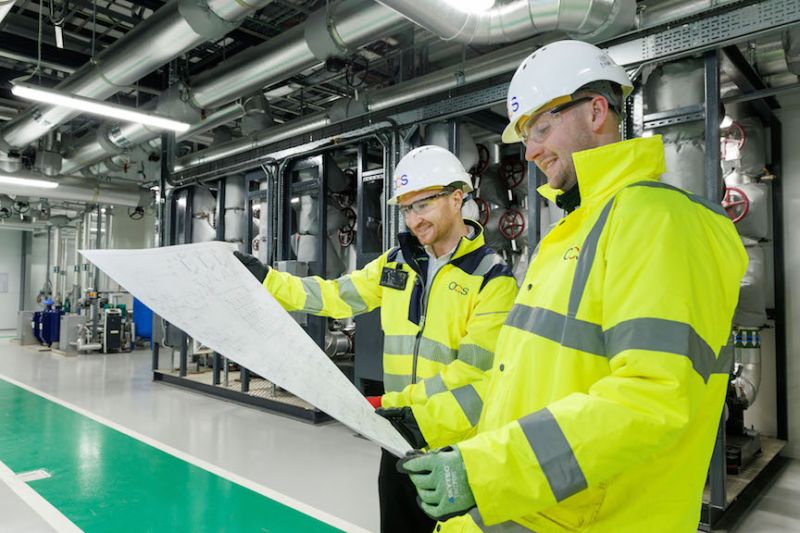
World Energy Day highlights an important truth: the road to net zero depends not only on policy commitments or new technologies, but on how buildings are operated every day. While strategic plans and design-stage sustainability targets often dominate the conversation, real progress comes from the decisions made within estates and plant rooms across the built environment. This places facilities management (FM) at the heart of the energy transition. A role that remains influential yet often overlooked.

Graeme Hamilton
Across many estates, the gap between design intent and operational reality remains persistently wide. Buildings may be delivered to high environmental standards, but those ambitions can fade once day-to-day pressures take hold. Compliance demands, shifting priorities and operational constraints can unintentionally dilute long-term sustainability goals. A hospital built with an advanced low-carbon heating system, for example, may see efficiency drop when clinical pressures require the system to be run in manual or override modes. These necessary interventions bypass the system’s optimisation controls, widening the gap between intended and actual performance.
FM teams are uniquely positioned to prevent these gaps from widening. Operating at the crossroads of compliance, operations, cost control and asset performance, they understand how systems behave under real conditions. This insight allows FM teams to spot inefficiencies that others may miss. A common example is simultaneous heating and cooling, an issue often arising as building operations evolve from original design. By correcting system set-points, FM teams can eliminate this unnecessary energy use while maintaining comfort and performance standards.
As organisations face tightening regulations – from updated streamlined energy and carbon reporting requirements to new Climate Change Agreement targets – the need for clear operational data and informed decision-making becomes even more vital. FM providers with integrated energy services capabilities are well placed to help organisations manage these pressures. By bringing together compliance expertise, strategic planning, funding knowledge, and technical delivery, they create a holistic approach that supports long-term decarbonisation.
Technology is increasingly central to this effort. Tools such as AI-enabled predictive maintenance, advanced building analytics and asset-level optimisation platforms are already delivering results across many estates. They reduce risk, highlight underperformance early, and support more efficient operations. But these tools only reach their potential when they are fully embedded into FM workflows. When used as standalone add-ons, their impact is limited. Integration, not just adoption, remains the real marker for success.
In the public sector, funding requirements reinforce this operational focus. Grant programmes now expect robust data, detailed modelling and strong evidence of long-term value. FM teams are often best placed to supply this information, ensuring that investment decisions are grounded in real site conditions. When energy upgrades are aligned with maintenance cycles and capital programmes, organisations can reduce disruption while maximising the return on investment.
World Energy Day ultimately underscores that the energy transition is an operational challenge as much as a strategic one. The most meaningful progress occurs in the everyday running of buildings: through the adjustments, insights and decisions made by FM and estates teams balancing cost, compliance, and carbon. As demand increases, regulations tighten and expectations for resilience grow, the role of FM will only become more critical.
Empowering FM with the right tools, data, and strategic remit is essential to turning energy ambition into measurable results. Organisations that recognise this, and position FM at the heart of their energy strategies, will be the ones best placed to lead the transition in the years ahead.
Author: Graeme Hamilton, Managing Director – Energy, OCS
More news can be found here: https://essmag.co.uk/category/news/