As electric vehicle charging infrastructure expands across fleets, public networks and commercial estates and haulage, can the grid cope? Sally Bailey, Head of EVC Sales UK at Vestel Mobility says smart load management will be central to efficient, sustainable electric transport.

Electrification of the UK transport systems is placing unprecedented demand on aging energy networks that were never designed for anything like the high-density, high-power loads EV transition requires. However, focusing purely on grid capacity risks overlooking a more immediate and actionable issue of the efficiency with which available energy is used at site level.
In practice, the constraint facing most EV charging projects is not absolute energy availability, but how that energy is distributed. Smart systems integrating site-wide, multi-charger DC load balancing is emerging as a critical enabler of EV charging sites and their operational performance.
At its most fundamental level, load balancing ensures that a site does not exceed its agreed power limit. In DC charging environments it becomes a far more sophisticated process. Rather than assigning fixed power levels to individual chargers, modern systems use shared power architectures, dynamically allocating energy across multiple charging sessions in real time. The approach aligns far more closely with how energy is consumed, rather than trying to engineer for theoretical worst case scenario.
Complexity
The complexity sits behind analysing the many variables faced by a charging site and deploying power in the most efficient way. Electric vehicles do not draw power in a predictable, linear way. Per vehicle charging demand varies on battery state, temperature, vehicle design and manufacturer software, compounded by the highly variable number of vehicles requiring charge from the same site between the busiest peak and quietest off-peak times.
Ironically, static infrastructure models, built around worst-case assumptions, often result in significant and costly over-engineering of the supply and underutilisation of available capacity for most of the day.
By contrast, dynamic load balancing continuously monitors demand and redistributes power where it can be used most effectively. The result is a system that operates closer to its true capacity, reducing wasted headroom and improving overall site efficiency.
Traditional approaches to DC charging often require upgrades to connections and infrastructure to accommodate peak demand scenarios that are costly, time consuming and resource intensive. By optimising the use of existing capacity, load balancing allows more chargers to be deployed within the same connection, lowering both capital expenditure and embedded carbon associated with infrastructure expansion.
Charging infrastructure that is dynamically managed can serve more vehicles over a given period without increasing peak demand. This translates into better return on energy consumed and more efficient use of installed equipment.
Challenges
However, this shift from static to dynamic systems introduces new considerations that need to be factored in.
Because load-balanced sites deliberately vary output, charging power is no longer constant. From an operational standpoint, this requires careful system design to ensure that energy distribution aligns with real-world usage patterns. For fleets and commercial operators, it also requires a degree of transparency in how power is allocated, ensuring that variability does not negatively impact operational performance.
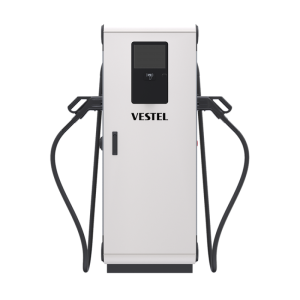
That is particularly relevant for electrified heavy-transport operations. In sites where we have installed Vestel Mobility 1MW and 1.2MW HGV charger system, the juggling act is exceptional load demand per vehicle and multiple vehicles arriving at the depot at the same time, against the need to reduce vehicle down time to maintain operational efficiency. In these scenarios, the businesses operational parameters may need to be adjusted to ensure seamless transition from ICE to EV haulage in balanced load charging sites. Yet, that may be only a minor pain compared to the cost, time and upheaval of a major grid upgrade.
Future Roads
As energy markets evolve, with increasing emphasis on flexibility services, dynamic tariffs and local optimisation, the ability to control and shape demand at site level will become increasingly valuable. Load-balanced charging infrastructure is inherently suited to these environments, enabling operators to respond to price signals, manage peak demand and integrate with on-site generation or storage.
In this context, load balancing is not simply about managing constraint. It is about enabling participation in a more flexible, decentralised energy system into the future.
It is also important to recognise the potential of battery energy storage systems (BESS) in this scenario. While load balancing optimises the distribution of available power, batteries can extend capability by providing additional capacity – well above maximum available grid supply – during peak demand. Together, they form a complementary approach, combining efficiency with flexibility.
As EV adoption accelerates across all forms of road transport, the sustainability of charging infrastructure will be judged not only by the energy it uses, but by how efficiently that energy is supplied and managed. The grid will always define the outer limits, but within those limits, it is intelligent, dynamic power distribution that will determine how effectively – and sustainably – EV charging infrastructure can scale.
Learn more: https://www.vestel-mobility.co.uk/
Click here for more news: https://essmag.co.uk/category/news/