As the energy transition gains momentum, attention is turning from renewable energy sources to the materials and mechanisms that drive them in an effort to improve overall efficiency while reducing environmental impact. Gary Rodgers, CEO of Magnomatics, looks at how magnetic gears help boost efficiency, reliability, and sustainability in the renewables sector.
The phenomenal rise of clean energy technologies such as solar, wind, and tidal is reshaping how the world is powered. As renewable energy deployment continues to grow exponentially – according to the International Energy Agency, global renewable energy capacity grew in 2023 by the fastest pace recorded in the last 20 years, increasing by 50% in 2023 to 510 gigawatts – the focus is now shifting to how to make these clean energy solutions more sustainable and efficient.
This means that in addition to facing the ever-increasing challenge to maximise clean energy production, the sector must now find ways to reduce the environmental impact of renewable installations to ensure they remain a sustainable and viable option for the future.
To facilitate this, investment in innovative, next-generation technologies is necessary. One such technology is turbine gearboxes – in both wind and water energy conversion systems, the gearbox is one of the most critical components.

Why magnetic trumps mechanical
Traditionally, mechanical gears are used inside of these energy-conversion systems to connect a high-speed electric machine to a low-speed physical energy source. However, over time, gearbox failures have accounted for a vast amount of downtime, maintenance, and loss of power generation. These issues have led to the emergence of magnetic gears as an alternative to mechanical gears.
Just like mechanical gears, magnetic gears transform rotational power between different speeds and torques, but instead of physically interlocking teeth, they use magnetic fields. By using magnets to transmit torque between the input and output shafts of the gear, they avoid mechanical contact.
This provides several advantages, such as high torque density, reduced acoustic noise and vibration, lower maintenance and improved reliability, inherent overload protection and contactless power transfer. While mechanical gears may break if too much torque is applied, magnetic gears simply slip past each other and then re-engage when the overload situation has passed without causing any damage to themselves or other parts of the system.
The technology driving turbines
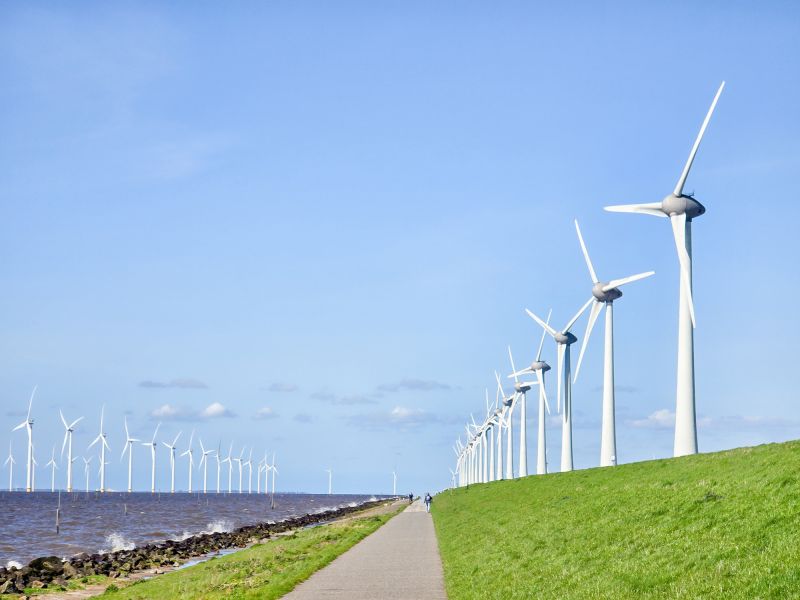
To ensure efficient, reliable generation innovative magnetically geared generators in particular are a key enabling technology for the renewable energy sector. Magnomatics offers revolutionary magnetic gears which have been implemented in a range of innovative industry solutions, including offshore wind and tidal generators.
The company’s patented Pseudo Direct Drive (PDD) is designed to overcome the torque limitations of conventional direct drive electrical machines. This PDD acts as a relatively high-speed electric motor with a relatively low load and utilises an internal magnetic gear, which results in low currents and hence, low temperatures. This in turn brings great efficiency and long life.
Simulations have shown that the PDD is less than two thirds the size of an equivalent permanent magnet motor and half the length of an induction motor. Furthermore, it can be designed to be 2 to 3% more efficient without compromising torque density, resulting in a very compact, highly efficient and reliable system, which is perfect for both wind and ocean turbines.
The technology is becoming increasingly recognised around the world, not only for its relevance in the renewable energy sector, but also for helping in a multitude of other areas, including aerospace, automotive, rail and wider industrial sector, to operate more sustainably. To complement its technology, Magnomatics offers a full consultancy service for the design and development of products and services.
Benefits of magnetic gears
Magnetic gear technologies offer several advantages over their conventional mechanical counterparts. Besides performing the speed change and torque transmission between input and output shafts by a contactless mechanism with a quiet operation and overload protection without the issues associated with conventional mechanical gears, they present drastic reductions in motor size, no cooling requirements, and reduced maintenance requirements.
Additionally, efficiency is vastly improved as there are no gearbox losses and, of course, gear wear is eliminated altogether. This is vital considering that wind and ocean turbine operating conditions are challenging, and that gearboxes are often in locations where it is extremely expensive to replace or repair.
Magnetic gears have a vital role to play in advancing the renewable energy industry as it promises significant, not just incremental, improvements. Compared to existing mechanical gearboxes, magnetic gears offer a compact, low-maintenance, robust and flexible solution that can improve overall efficiencies while cutting carbon emissions. Designed to help overcome some of the technical challenges faced by both the wind and ocean energy sectors, it also ensures that potential operational bottlenecks are negated.
As the energy transition gains momentum, employing magnetic gears in wind and ocean turbines is one way in which the renewables sector can reduce overall costs and its impact on the environment.