
With a proposed law potentially requiring millions of UK buildings to be made more energy efficient by 2035, a new interactive map has revealed the areas with the most work opportunities for tradespeople.
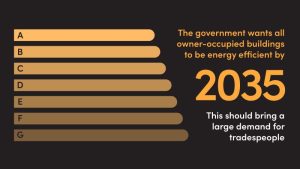
The government’s Minimum Energy Performance of Buildings Bill is currently being considered by the House of Commons, and if it passes, would require all owner-occupied properties to have an Energy Performance Certificate (EPC) rating of at least C by 2035, creating a large demand for tradespeople’s services.
With this in mind, IronmongeryDirect, the UK’s largest supplier of specialist ironmongery, analysed the current and potential energy rating of over 18 million homes, aiming to identify the local authorities with the most properties that could be made more sustainable.
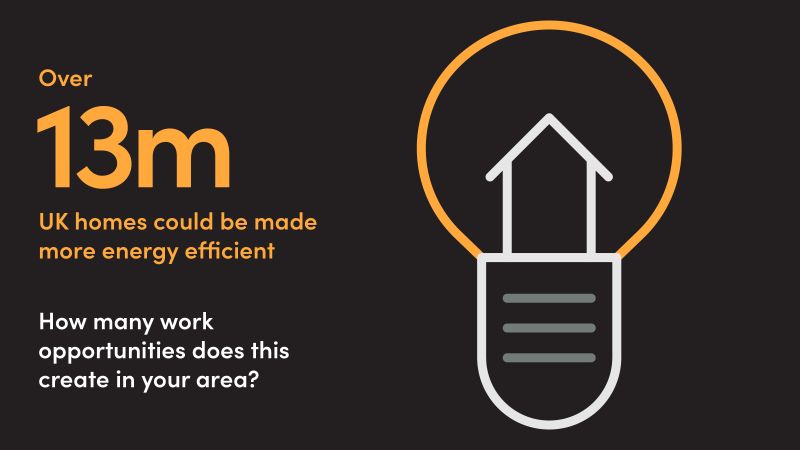
It found that over 13 million buildings (73%) could improve their EPC rating, through measures such as installing insulation, condensing boilers or heat pumps.
The most opportunities are found in Birmingham, where almost a quarter of a million (238,926) properties could be made more energy efficient. Leeds (187,293) and Cornwall (149,926) take second and third place respectively.
The UK local authorities with the most homes that could be made more energy efficient are:
|
# |
Local Authority |
Properties where energy ratings could be improved |
Total properties |
Percentage of properties where energy rating could be improved |
|
1 |
Birmingham |
238,926 |
318,512 |
75% |
|
2 |
Leeds |
187,293 |
256,400 |
73% |
|
3 |
Cornwall |
149,926 |
191,938 |
78% |
|
4 |
County Durham |
147,263 |
173,248 |
85% |
|
5 |
Bradford |
127,855 |
157,881 |
81% |
|
6 |
Manchester |
125,289 |
192,116 |
65% |
|
7 |
Liverpool |
119,954 |
164,524 |
73% |
|
8 |
Sheffield |
117,315 |
164,395 |
71% |
|
9 |
Wiltshire |
116,781 |
151,393 |
77% |
|
10 |
Buckinghamshire |
116,381 |
160,414 |
73% |
To help tradespeople who are tasked with improving the energy rating of buildings, IronmongeryDirect spoke to Oliver Creevy, managing director at Insulation Advisor, to share some of the main ways to improve efficiency:
1) Install a condensing boiler – “Upgrading to a modern, energy-efficient boiler, such as a condensing boiler, can significantly reduce energy consumption and enhance the overall performance of a heating system.”
2) Replace windows and doors – “Windows and doors are key to maintaining a well-insulated home. Double or triple glazing for windows improves thermal efficiency, while upgrading doors, especially those with gaps or poor sealing, can also contribute to better insulation.”
3) Upgrade insulation – “Assess the current insulation levels in the property and suggest upgrades where necessary. This can include loft insulation, cavity wall insulation, and insulating floors.”
4) Draught-proofing – “Sealing gaps around windows, doors, and other openings can prevent cold air from entering and warm air from escaping. This simple yet impactful act improves energy efficiency and enhances comfort by maintaining a consistent temperature.”
5) Install solar panels – “While the initial investment can be substantial, the long-term benefits of solar panels, including lower electricity bills and a reduced carbon footprint, make them a worthwhile suggestion for customers looking to embrace renewable energy solutions.”
Ellis Osborn, Ecommerce Manager at IronmongeryDirect, said: “The push for greater energy efficiency will ultimately benefit us all, but it is of particular interest to tradespeople, who will undoubtedly be required to help the nation on this journey.
“The demand for sustainable buildings could create lots of opportunities in our industry, and that’s why we’ve launched our new interactive map, so people can spot areas where the most work is required.”
To use the interactive map and see how many opportunities there are in each local authority, visit: https://www.ironmongerydirect.co.uk/research/warmer-homes-greener-planet


