The FIFA World Cup in Qatar 2022 set new records with 5 billion television viewers and 1.2 million in-person attendees from across the globe. As the first World Cup planned after the Paris Agreement, environmental sustainability was integrated throughout the event with remarkable results. In this piece, Dr. Valentina Dedi, Lead Economic Advisor at KBR, explores football’s journey towards carbon reduction and examines how major sporting events like the World Cup can drive environmental progress as Saudi Arabia prepares to host in 2034.

Dr Valentina Dedi
The decarbonisation game
Football’s global popularity has come with a significant environmental impact. The sport generates over 30 million tons of CO₂ annually, equivalent to the emissions of a country like Denmark (carbon literacy, 2023). While the travel undertaken by spectators is responsible for around half of this, stadium energy use and infrastructure construction are also significant contributors, with major tournaments driving a lot of this activity.
Football’s global popularity has given the sport a unique opportunity to positively influence the wider decarbonisation effort. A growing number of initiatives sets the example for the game and the wider world to follow.
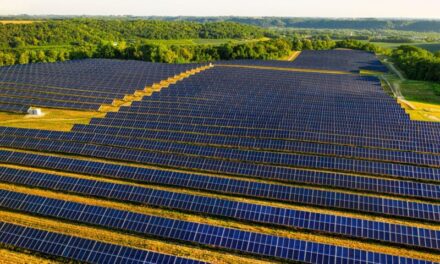
Stadiums are now built with innovative features to reduce their environmental impact, including energy-efficient lighting, green building materials, renewable energy sources, water conservation strategies, waste management practices and more. Numerous clubs have installed solar panels and wind turbines to power their stadiums. The Amsterdam ArenA features both, with one of the largest solar roofs in the world and a wind farm, significantly contributing to the reduction of its carbon footprint.
Several clubs have further launched initiatives to reduce travel-related emissions, such as bike-sharing and EV charging infrastructure. Clubs have also been investigating the adoption of electric buses for team travel and encouraging the use of public transit for fans. Belgian football club, Union Saint-Gilloise, stands out in reducing its air travel emissions, committing to using sustainable aviation fuel for all international flights.
The climate strategy
At COP26 in Glasgow, UK, FIFA’s President accentuated the industry’s determination to play a part in climate change, launching FIFA’s Climate Strategy which pledges to halve emissions by 2030 and achieve net zero by 2040. This pledge underlines the sport’s potential to become a positive influence, and the World Cup is a very powerful event in this regard.
Large-scale construction projects, such as stadiums, are major contributors to global carbon emissions due to the vast number of materials and energy required. The construction projects for the FIFA World Cup in Qatar helped establish new standards for sustainability in sporting infrastructure. All stadiums achieved Global Sustainability Assessment System (GSAS) certifications for design, construction and operations. The Khalifa International Stadium utilised a combination of low-carbon concrete and recycled materials, effectively minimising its environmental footprint. Although it comes with a significant price premium, low carbon concrete can save 80% of CO2 emissions as it uses waste from industrial processes.
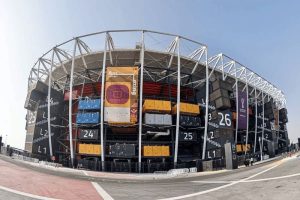
However, the Ras Abu Aboud Stadium, also known as Stadium 974, stood out as the tournament’s symbol of sustainable innovation. Built using around 1,000 recycled shipping containers and modular components, the whole arena could be dismantled after the tournament and its materials be repurposed for other projects. This approach helps reduce construction waste and overall resource use, but perhaps most importantly, sets new standards in temporary infrastructure.
Saudi Arabia 2034
As the world’s most visible construction projects, building the infrastructure for a World Cup is an equally powerful opportunity to demonstrate new, sustainable and forward-thinking construction techniques that can have a long-lasting impact for the environment. The 2034 FIFA World Cup in Saudi Arabia can offer a unique opportunity to set new milestones in sustainability at a wider scale, in terms of the infrastructure construction project and the tournament’s energy use, due to its already ambitious scope. Its bold plans include constructing 11 new stadiums and refurbishing four existing ones, alongside the development of supporting infrastructure such as airports, hotels, and transport networks.
One very interesting factor will be how the carbon footprint of the tournament is measured, and whether new benchmarks are set in the methodology used to calculate emissions and publish them. Especially in large-scale events like tournaments, there is an increasing demand for transparency and accuracy in how carbon emissions are tracked. The use of more sophisticated tools for real-time tracking of carbon emissions can give a better picture of tournaments’ environmental impact as it can provide a more detailed breakdown of emissions by source.
The World Cup of opportunity
With new infrastructure central to mega projects such as the Saudi Arabia World Cup 2034, the energy industry can leverage this opportunity to pioneer new sustainability standards. The focus on renewable materials, low-carbon design, and optimised energy use cannot only minimise the environmental impact of the tournament but also set a precedent for future infrastructure projects worldwide. Saudi Arabia can demonstrate its commitment to environmental responsibility and drive innovation, as well as carbon accounting and emissions reporting, leaving a lasting legacy of sustainability in sports and beyond.