This year is a pivotal turning point for the industry as new regulations are forcing data centres to address their energy hungry operations. In compliance with the EU Energy Efficiency Directive, data centres with IT power demand of 500 kW or above must publish their environmental KPIs, including energy usage, annually. This begs the question whether operators are confident enough in their figures to allow public disclosure. If not, then now is the time to focus on efficiency and prove that data centres fit in a sustainable future.
With demand surging and scrutiny tightening, data centres must strike a sharp balance between uptime and efficiency. The national grid predicts a six-fold increase in the sector’s power consumption by 2034 making a re-evaluation of current infrastructure a non-negotiable. The next era of data centres is all about high performance with a reduced footprint.
Getting the full picture with intelligent power monitoring
Improving efficiency starts with having full visibility of energy consumption. That means a proper understanding of exactly where energy is being consumed and how to avoid it being wasted.
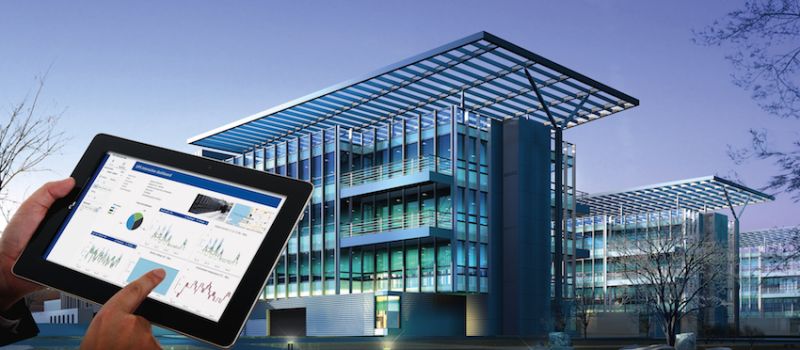
Intelligent power monitoring is becoming the go-to solution for this challenge. These tools offer real-time visibility and deeper insights that can be turned into informed action such as identifying baselines, detecting irregularities and tracking energy performance. They can even pinpoint which systems draw the most power during peak times and locate inefficient equipment or operating patterns.
Granular details such as these provide operators with a full understanding of the Power Usage Effectiveness (PUE) of data centre operations to help manage and optimise energy use more effectively – even at a sub-tenant level. This way colocation providers not only improve their own sustainability but give clients full visibility of their energy consumption and carbon impact.
The new generation of UPS systems leading the way
Visibility generates insights that empower operators to take action and start building resilience. It is critical that data centres can fulfil availability, and efficiency demands, and support the uninterrupted supply of critical loads in the most carbon-conscious way possible.
The latest generation of UPS systems ensure instant transitions during grid disturbances without compromising load protection. In ‘smart conversion mode’, advanced algorithms are used to continuously monitor the network and choose the best operating mode. Using the bypass line as the main power source, the inverter – which delivers power to the load – is never switched off, therefore, in the event of grid disturbances, the UPS can instantly switch back to double conversion mode, providing the highest standards of protection for critical power systems.
Unlike traditional double conversion mode, whose efficiency can dwindle when load levels are high, static bypass gains in efficiency when the load rate is high. For example, at a 30% load rate, double conversion mode can achieve almost as high a PUE (96.5%) as smart conversion (98%) mode, but increase that to a full load, and double conversion drops to 96% while smart conversion mode reaches an efficiency rate of over 99%. This can deliver substantial energy savings, saving up to 350 MWh of electricity annually, in addition to reducing heat generation and cooling costs.
Next generation systems also reduce classic UPS energy losses by up to five times. These savings reduce heat output, cooling requirements, carbon emissions and operating costs – all while maintaining continuous power protection.
Modularity is another key consideration when selecting UPS systems. In modular architectures, independent power modules can be added or replaced without having to switch to bypass or interrupting the load. Since the failure of a module does not affect the overall system performance or uptime, operators can scale capacity or perform maintenance with minimal disruption. Together, these features enable data centres to consistently balance power quality with scalability without making any compromises.
Compliance today, innovation for the future
Sustainability is no longer a choice for data centres. Although regulatory expectations are rising, the incentives exceed mere compliance. By leveraging advanced power systems, data centre operators can reduce energy consumption and operational costs, all while improving resilience and efficiency.
It is clear the industry is headed in the right direction, with PwC revealing that more than 80% of UK organisations expect to increase investment in energy management in the next 12 months. Data centres must seize the moment for innovation to future-proof operations and meet sustainability goals.

Article provided by Colin Dean, Managing Director, Socomec
For further stories, click here.