As leading economies continue to ramp up renewable investments, it is vital they use every resource and solution at their disposal to simplify and speed up renewable integration. Here, Petr Valenta, Global Product Line Manager with ABB, explains the benefits of the latest generation of compact secondary substations (CSS) and why they could help both utility providers and industry gain an innovation advantage as the renewables race gains traction.
The renewables race is on, as leading economies continue to ramp up the scale and pace of renewable investments to ensure future energy security and meet their net-zero goals. The EU recently raised its binding renewable target for 2030 to a minimum of 42.5 percent, up from the previous 32 percent. For the first time, the Renewable Energy Directive also included industry, as well as reinforcing the regulatory framework for renewable energy use in transport. This is set to lead to a massive scaling-up and speeding-up of renewable energy across power generation, industry, buildings and transportation.
As nations across the world compete to become the global renewable energy leader, it is crucial that they utilize every resource and solution available to them. Utility providers and private companies need to make smart decisions about the underlying electrical infrastructure that connects renewable energy sources to the grid and is vital in supporting the energy transition.
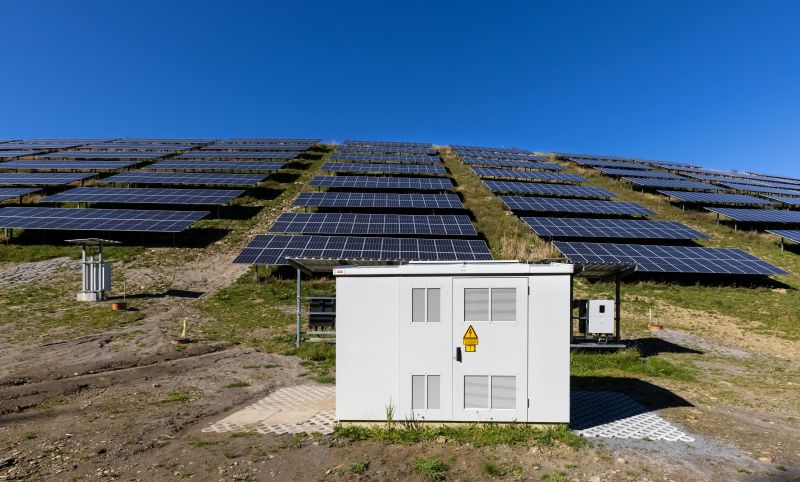
One solution can be found with the latest generation of Compact Secondary Substations (CSS). Purpose-designed to provide a rapid, all-in-one response for even the shortest delivery frameworks and the most complex projects, the CSS can easily and rapidly connect renewable energy sources, such as solar, with the grid and provide sophisticated data analytics capabilities to help operators improve energy efficiency and reduce their operating costs.
What is a CSS and how can it benefit utility providers and businesses?
Substations play an important role in safely and effectively transmitting electricity through the electrical system at different voltages that can be transformed to enter businesses and homes at a usable level.
A CSS is a prefabricated solution containing medium voltage (MV) switchgear, distribution transformers, low voltage (LV) switchboards, connections and auxiliary equipment, which is used for energy transformation in secondary distribution networks to supply LV energy from MV systems. The CSS can also connect solar collection units ‒ as well as other distributed energy resources ‒ to the electricity grid, allowing utility providers to optimize the use of renewable energy and balance the power supply more efficiently.
For businesses or providers that need to increase capacity quickly, such as renewable energy operators, as well as within the e-mobility and data center industries, the speed of installation is the number one attraction for investing in a CSS, rather than a traditional substation.
Fabricated and tested off-site to each customer’s specifications, the CSS is delivered to the customer as a complete solution, resulting in faster deployment, simplified execution and commissioning, and a reduced need for skilled teams on the ground. This means customers can respond faster to increasing power demands and changing distribution needs. Additional CSS units can also be added quickly and easily to increase capacity without significant disruptions.
In addition, CSS solutions are digitally enabled, meaning they can connect easily to customers’ SCADA systems, which are used to assess the state of each piece of equipment in the substation with the option for remote operation. The data acquired via these systems can then be analyzed for insights into how the station is performing, allowing customers to make informed decisions on how to improve performance, reduce maintenance costs and optimize energy consumption.
Ramping up capacity
While utility providers remain the primary customer for ABB’s distribution products, we are also seeing growing demand for CSS solutions from other sectors as the energy transition accelerates, including data centers, e-mobility, and energy storage linked to renewables and solar power generation. Compact secondary substations can be tailor-made for each of these sectors to satisfy detailed technical specifications.
For example, in the transportation sector, CSS units can be designed to serve as the power distribution hub for electric vehicle (EV) charging stations. As these systems can facilitate the integration of renewable energy into EV charging infrastructure, this could allow customers to charge EVs using green energy.
With the renewables race continuing to gain traction, utility providers and businesses are looking to strengthen their green energy capacity as rapidly as possible. It’s no wonder that prefabricated, digitally enabled solutions like CSS are coming into the spotlight, offering a more efficient way to integrate renewable sources into the grid as well as improving the lifetime efficiency of power installations.
As we head towards an electrified future, these compact solutions are set to play a pivotal role in the evolution of the grid, giving operators who embrace them a substantial head start on the road to net zero.