As the UK continues to grapple with some of the highest energy prices in Europe, the energy challenge for businesses has been thrown into even sharper relief by recent events, writes John Behan, CEO, AMPYR Distributed Energy.
For decades, an energy procurement strategy was one of the few things that business leaders didn’t need to worry about with prices at a reasonable, predictable level and unconstrained supply. But those days are now firmly in the past, with the tumult of recent times a rude awakening for many. Instead, energy is taking centre stage in businesses’ plans, and how it is sourced, priced and managed has become a critically important investment decision.
That said, it is worth noting that not all costs of generating energy have risen. Indeed, the costs of renewable energy assets such as solar have never been lower. Instead, prices are rising due to supply constraints – most recently as result of the closure of the Straits of Hormuz – that have caused gas prices to spike and spread volatility through wholesale markets which is resulting in higher costs for businesses.
The impact of this constrained supply can be seen across the globe but is perhaps particularly apparent in two of Europe’s heavyweight economies – the UK and Germany, with businesses in both countries struggling with high and unpredictable energy prices when relying on energy from the grid. These high costs are being driven by different factors, including the costs of upgrading the grid, but in both countries the challenge is being exacerbated by global geopolitical uncertainty.
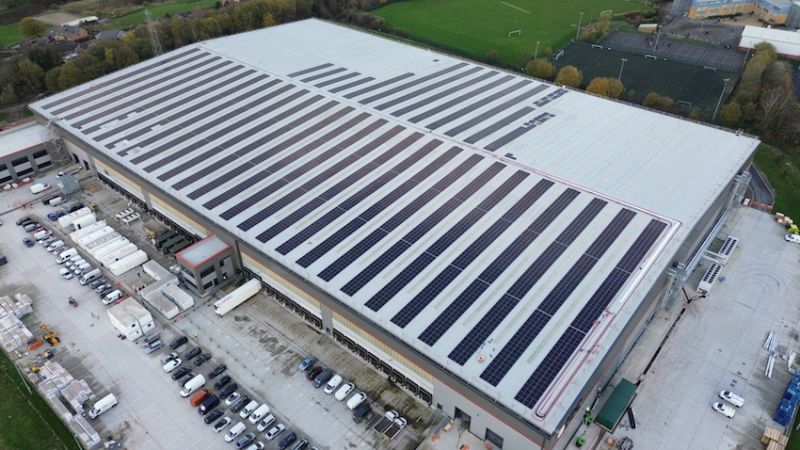
In both countries, and across the globe, onsite energy is playing an increasingly important role in how businesses are responding to these challenges. By using onsite energy, companies have a route to securing affordable, reliable, and renewable power over the long-term through the signing of Power Purchase Agreements (PPAs) to install on-site renewable assets without being exposed to the high and variable costs that come from purchasing energy from the grid.
Such PPAs offer direct supply at a guaranteed price for a fixed duration, an increasingly attractive proposition amidst volatility in the global wholesale market. Naturally, energy-intensive industries – such as manufacturers and data centres – are at the forefront of this change, but the trend can be seen across a range of different sectors as short-term procurement models, designed to operate in a time of surplus capacity and stable prices, are increasingly exposed.
The benefits of a longer-term approach that treats energy investments as a vital component of infrastructure planning are also becoming increasingly apparent. But to unlock these benefits, it’s essential for business leaders to carefully consider their company’s estates, assets, and operational footprint within the context of broader operational and financial strategies.
That will help to ensure that they come to the right decision about whether to invest themselves or work with a reputable partner to finance and install rooftop solar, onsite battery energy storage, or co-located wind power, or some combination thereof. All can make a potentially valuable contribution and there isn’t a one-size-fits-all approach that will be right for every business, but that flexibility is why onsite energy offers businesses a strategic advantage.
Once installed, onsite energy can bolster resilience, predictability and optionality, as well as improved sustainability credentials, particularly for companies operating in energy-intensive industries. Indeed, with ESG considerations still front of mind for many consumers and investors, the advantage of being able to point to renewable assets that are helping to decarbonise operations is significant.
Indeed, with other routes to improve sustainability – such as reducing energy consumption – delivering increasingly limited returns, the importance of electrification is only continuing to grow. As a result, access to clean, reliable power is quickly becoming a central pillar of many corporate sustainability strategies.
Ultimately, onsite energy can improve energy resilience and reduce dependency on the grid at a moment when that’s arguably never been more important for businesses battling high energy costs. Onsite energy represents more than just a supply solution, it gives cost certainty to businesses navigating volatile energy markets.
Find out more: AMPYR Distributed Energy
Click here for more news: https://essmag.co.uk/category/news/